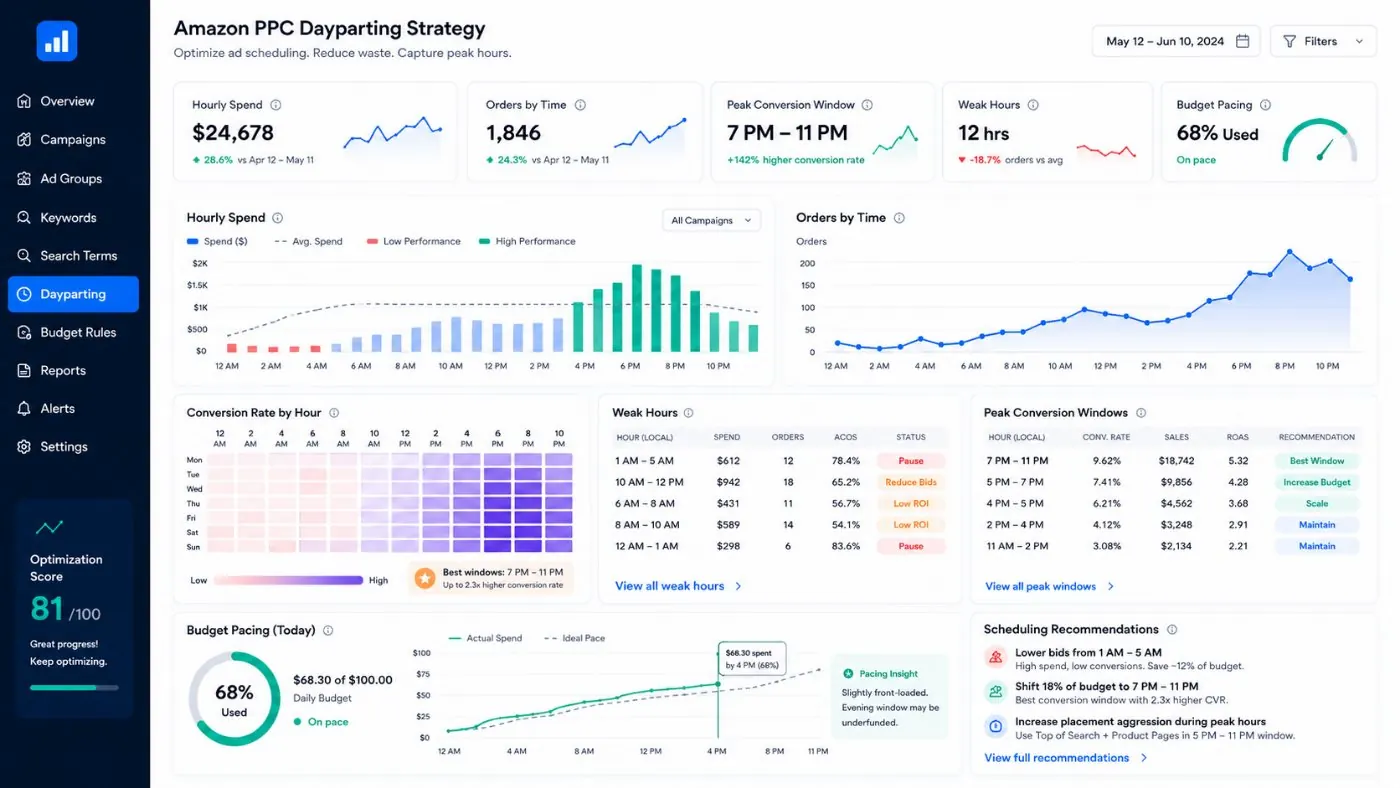
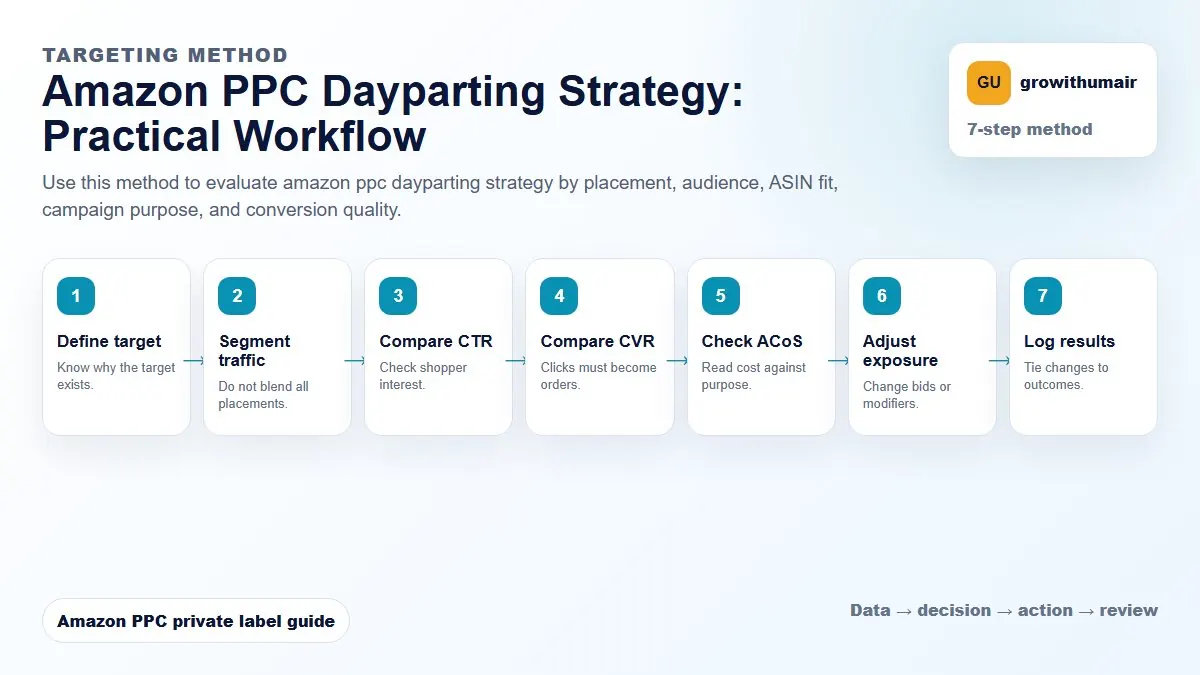
Amazon PPC Dayparting Strategy: step-by-step method
Use this method to evaluate amazon ppc dayparting strategy by placement, audience, ASIN fit, campaign purpose, and conversion quality. The aim is to move from raw Amazon Ads data to a written action list: what to protect, what to reduce, what to test, and what to review again.
- 1. Define target: Know why the target exists.
- 2. Segment traffic: Do not blend all placements.
- 3. Compare CTR: Check shopper interest.
- 4. Compare CVR: Clicks must become orders.
- 5. Check ACoS: Read cost against purpose.
- 6. Adjust exposure: Change bids or modifiers.
- 7. Log results: Tie changes to outcomes.
How to choose the next action
Do not treat one metric as the whole answer. For every change, read the metric beside campaign purpose, search intent, listing readiness, rank movement, and profit. This prevents cutting useful traffic just because one report looks uncomfortable.
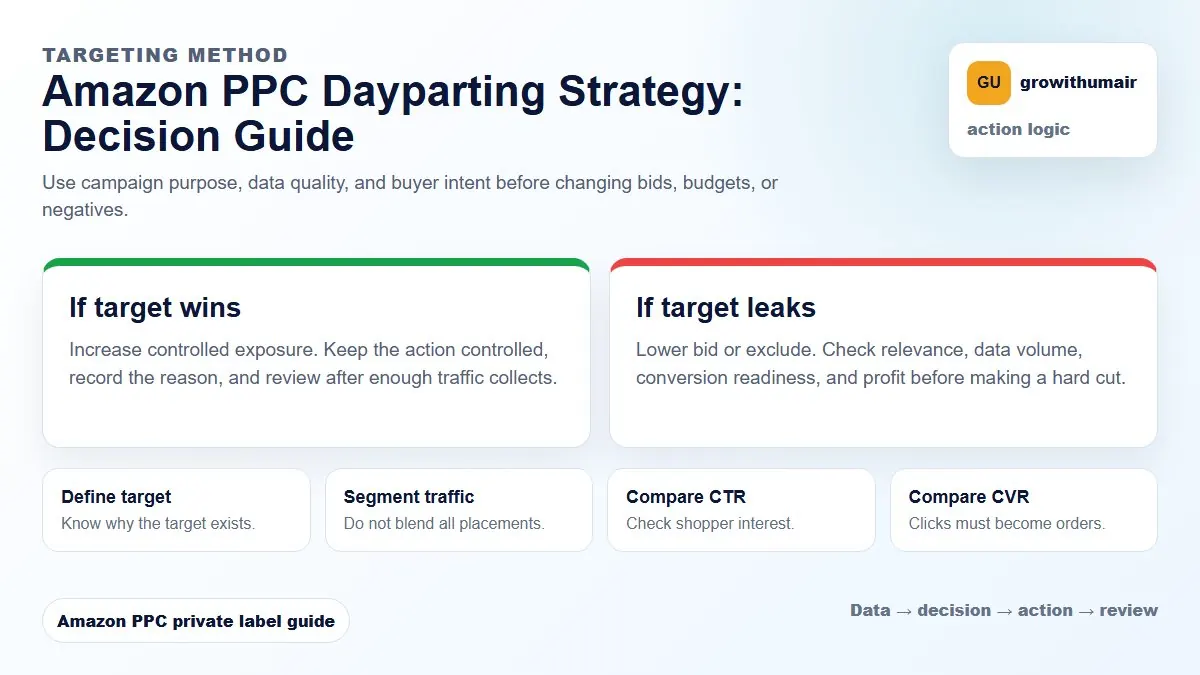
Use dayparting to solve a proven timing problem, not as a shortcut for bad bids, weak listings, or poor keyword targeting.
What dayparting means
Dayparting means changing ad activity or bids based on time of day. Sellers use it when budget is wasted during low-converting hours or when campaigns run out before stronger buying hours. The goal is not to spend less everywhere. The goal is to keep budget available when traffic is more likely to convert.
When dayparting helps
- Campaigns run out of budget before peak conversion windows.
- Spend is consistently high during weak hours with low orders.
- Historical data shows strong hour-by-hour order patterns.
- You have enough sales volume to trust the trend.
- The campaign is mature, not a new launch campaign still gathering data.
When dayparting can hurt
Ranking campaigns need visibility and sales velocity. If you pause ads during hours that still produce relevant clicks and occasional orders, you may slow rank movement. Dayparting can also make data harder to read because some terms never get enough impressions to prove themselves.
| Campaign type | Dayparting approach | Reason |
|---|---|---|
| Exact winners | Protect high-converting hours | Keep profitable visibility active |
| Research campaigns | Limit weak windows carefully | Control discovery cost |
| Launch campaigns | Use lightly or avoid early | Data and rank velocity matter |
| Brand defense | Keep stable coverage | Protect branded traffic |
What to check before scheduling ads
Before setting schedules, review budget utilization, out-of-budget times, order timing, conversion rate, ACoS, and TACoS. If the problem is broad match waste, dayparting will not fix it. If the problem is weak product page placements, placement bid control is more direct.
A practical dayparting workflow
- Pull at least 2 to 4 weeks of performance data.
- Separate campaigns by purpose before reading timing data.
- Identify hours with repeat spend and weak conversion.
- Check whether those hours still support ranking or discovery.
- Reduce exposure gradually rather than shutting off traffic completely.
- Review the change after 7 days and compare sales, ACoS, TACoS, and rank.
If a campaign is running out too early, first check budget allocation, bids, placements, and search terms. Dayparting is the final layer, not the foundation.