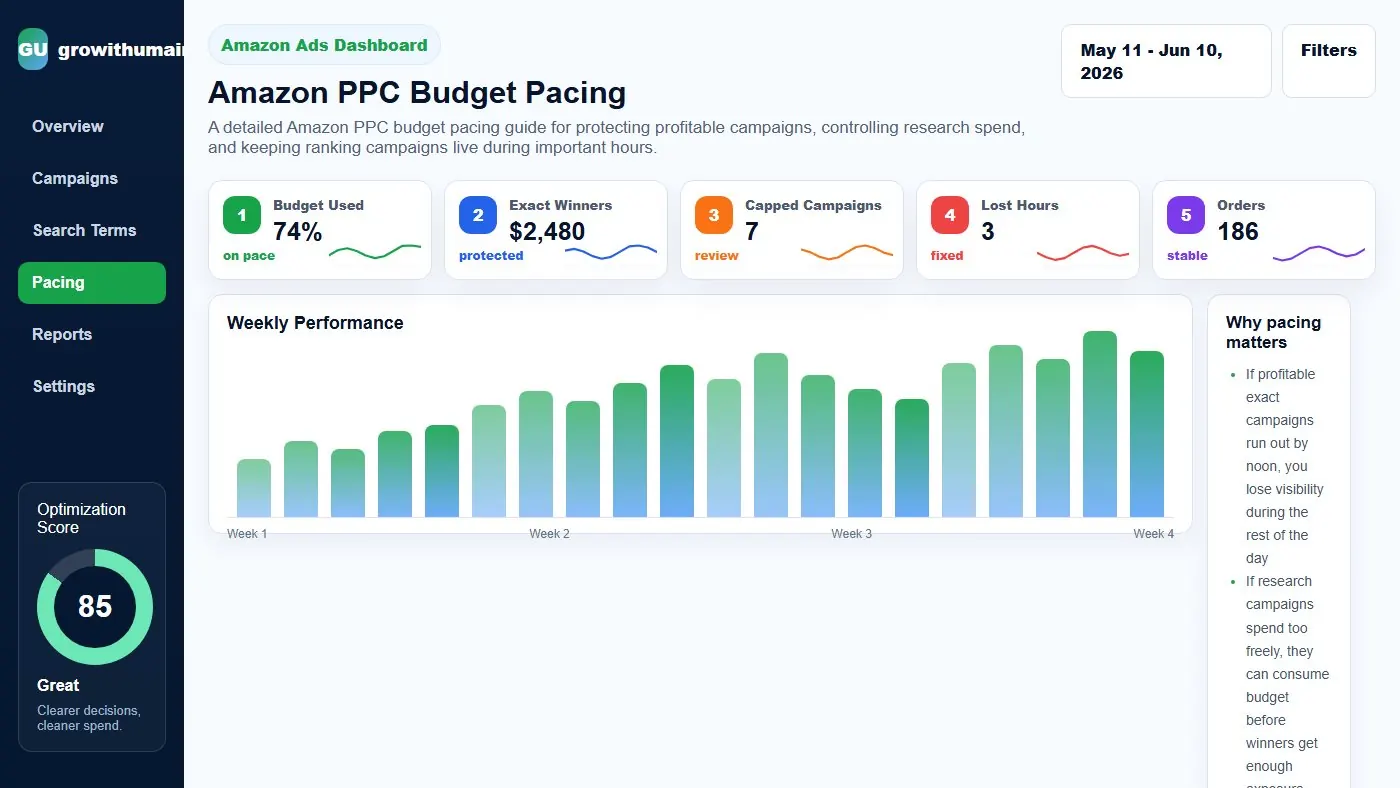
Amazon PPC Budget Pacing: step-by-step method
Use this method to make amazon ppc budget pacing easier to execute, report, audit, and improve every week. The aim is to move from raw Amazon Ads data to a written action list: what to protect, what to reduce, what to test, and what to review again.
- 1. Map purpose: Every campaign needs a job.
- 2. Group campaigns: Organize by product and role.
- 3. Set naming rules: Make reports easier to read.
- 4. Check budgets: Protect priority campaigns.
- 5. Review reports: Measure what changed.
- 6. Write actions: Make next steps clear.
- 7. Repeat weekly: Consistency beats random fixes.
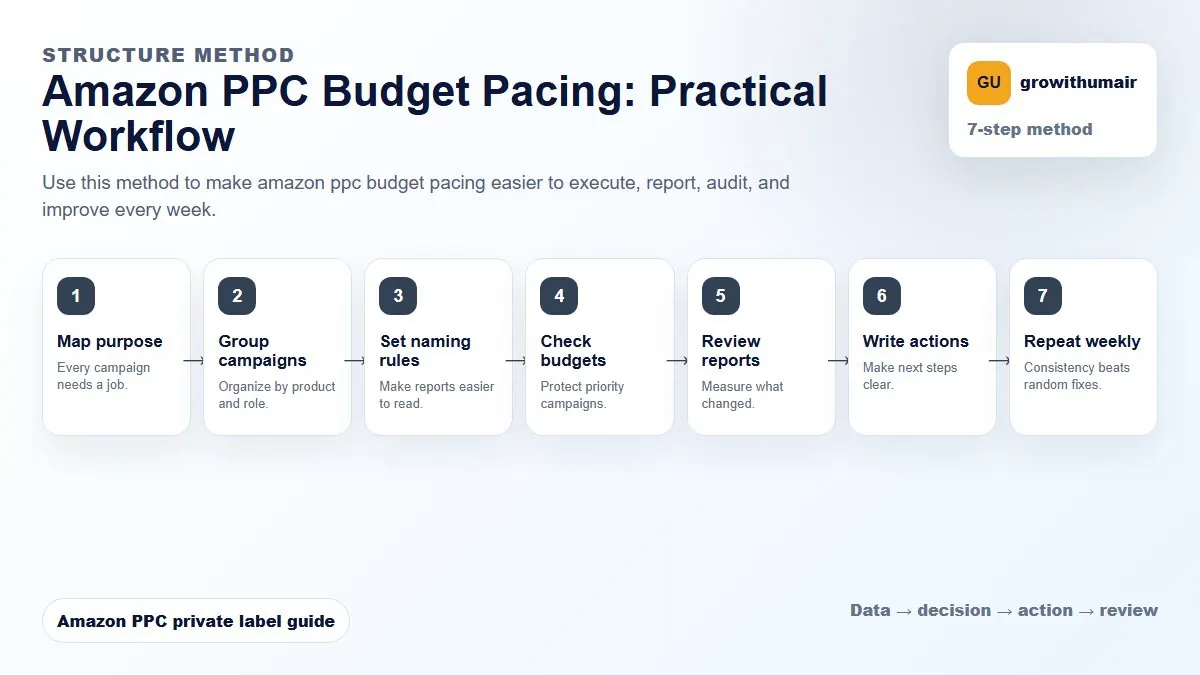
How to choose the next action
Do not treat one metric as the whole answer. For every change, read the metric beside campaign purpose, search intent, listing readiness, rank movement, and profit. This prevents cutting useful traffic just because one report looks uncomfortable.
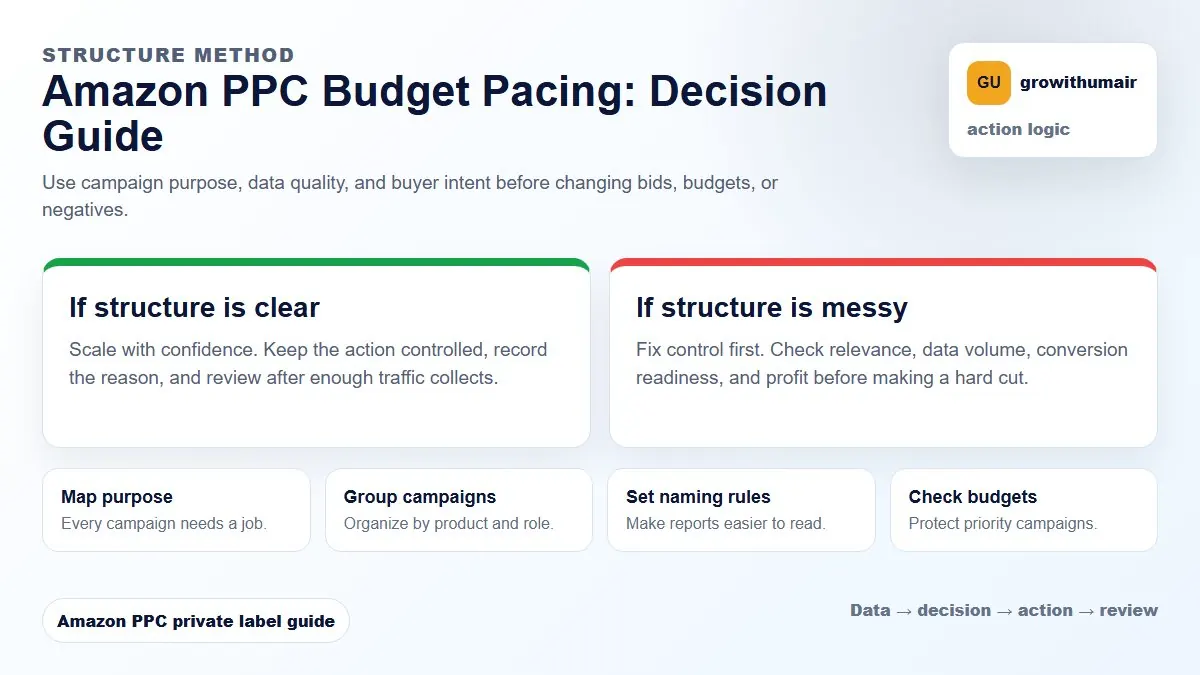
A detailed Amazon PPC budget pacing guide for protecting profitable campaigns, controlling research spend, and keeping ranking campaigns live during important hours.
Why pacing matters
If profitable exact campaigns run out by noon, you lose visibility during the rest of the day. If research campaigns spend too freely, they can consume budget before winners get enough exposure.
Pacing protects account priorities.
Campaigns that deserve budget protection
Exact winner campaigns, brand defense, profitable product targeting, and high-priority ranking campaigns usually deserve stable budgets. Research, broad, auto, and launch experiments need controlled budgets with clear review windows.
Daily budget vs real opportunity
A campaign budget should match the size of opportunity. If the keyword has high demand, strong conversion, and acceptable ACoS, a tiny budget will limit growth. If the campaign is exploratory, too much budget can create waste quickly.
When to raise budgets
Raise budget when the campaign is profitable, consistently runs out, has good conversion, and supports rank or sales growth. Do not raise budget only because Amazon recommends it.
Weekly pacing workflow
Review campaigns limited by budget, check time of day spend patterns, protect exact winners, cap weak research, and move unused budget from low priority campaigns into profitable or strategic campaigns.
Practical checklist
- Review the data by campaign purpose before making changes.
- Separate discovery, ranking, defense, and exact winner campaigns.
- Check search terms, placements, budgets, conversion rate, and rank movement together.
- Write the next action clearly so the account does not drift.
- Recheck results after enough clicks and orders have collected.
Decision table
| Campaign type | Pacing rule | Action |
|---|---|---|
| Exact winners | Should stay live | Increase budget |
| Brand defense | Stable coverage | Protect |
| Research | Controlled spend | Cap budget |
| Launch ranking | Planned window | Monitor hourly |
| Weak broad | Avoid drain | Reduce budget |
I can review the account, identify the first fixes, and turn the data into a clear PPC action plan.
Book PPC audit