Amazon PPC Profitability Analysis: step-by-step method
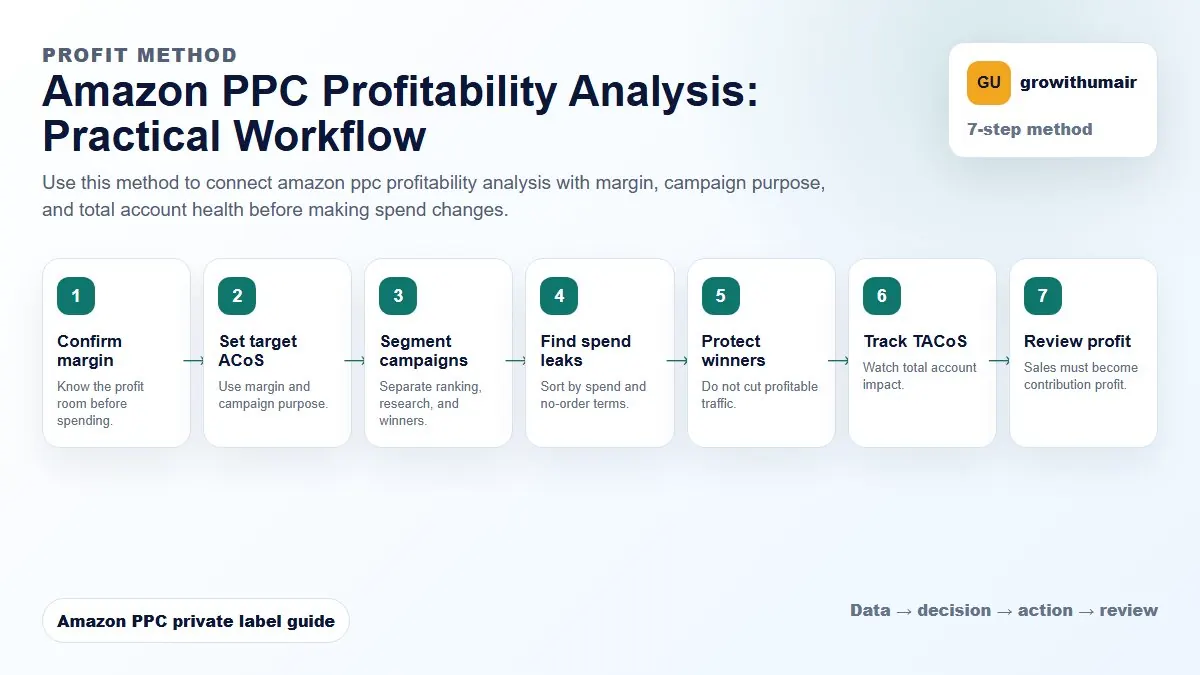
Use this method to connect amazon ppc profitability analysis with margin, campaign purpose, and total account health before making spend changes. The aim is to move from raw Amazon Ads data to a written action list: what to protect, what to reduce, what to test, and what to review again.
- 1. Confirm margin: Know the profit room before spending.
- 2. Set target ACoS: Use margin and campaign purpose.
- 3. Segment campaigns: Separate ranking, research, and winners.
- 4. Find spend leaks: Sort by spend and no-order terms.
- 5. Protect winners: Do not cut profitable traffic.
- 6. Track TACoS: Watch total account impact.
- 7. Review profit: Sales must become contribution profit.
How to choose the next action
Do not treat one metric as the whole answer. For every change, read the metric beside campaign purpose, search intent, listing readiness, rank movement, and profit. This prevents cutting useful traffic just because one report looks uncomfortable.
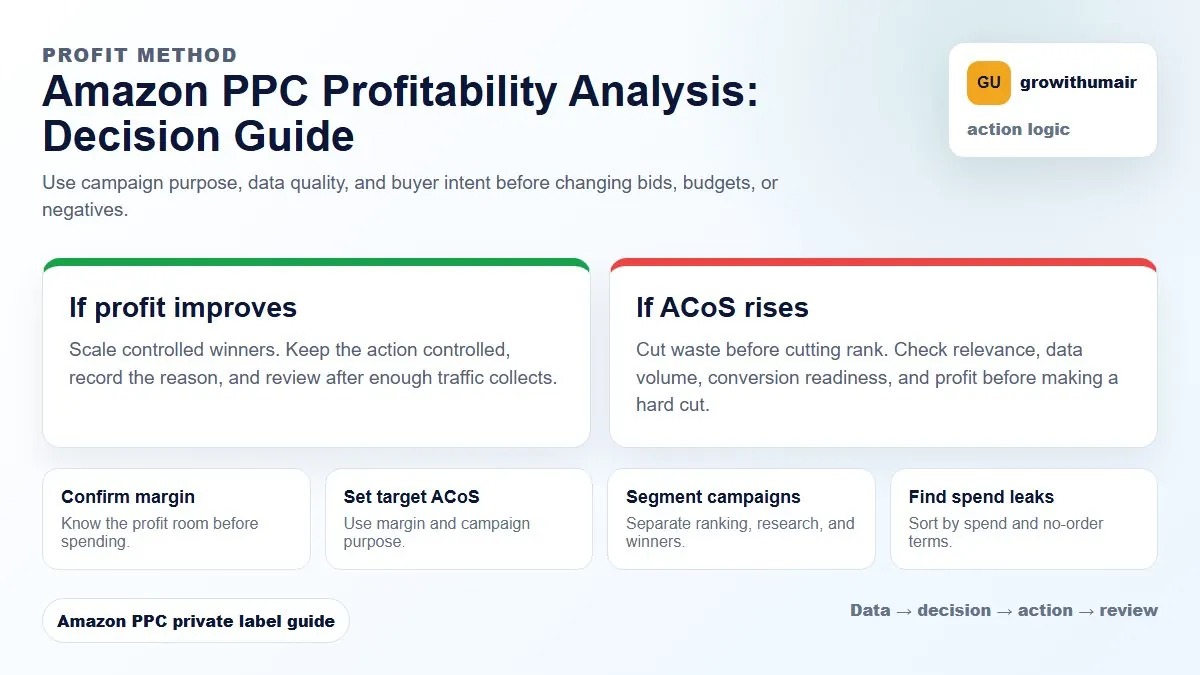
A campaign is not automatically good because ACoS is low, and it is not automatically bad because ACoS is high. Profitability depends on product economics and the job the campaign is doing.
Start with contribution profit
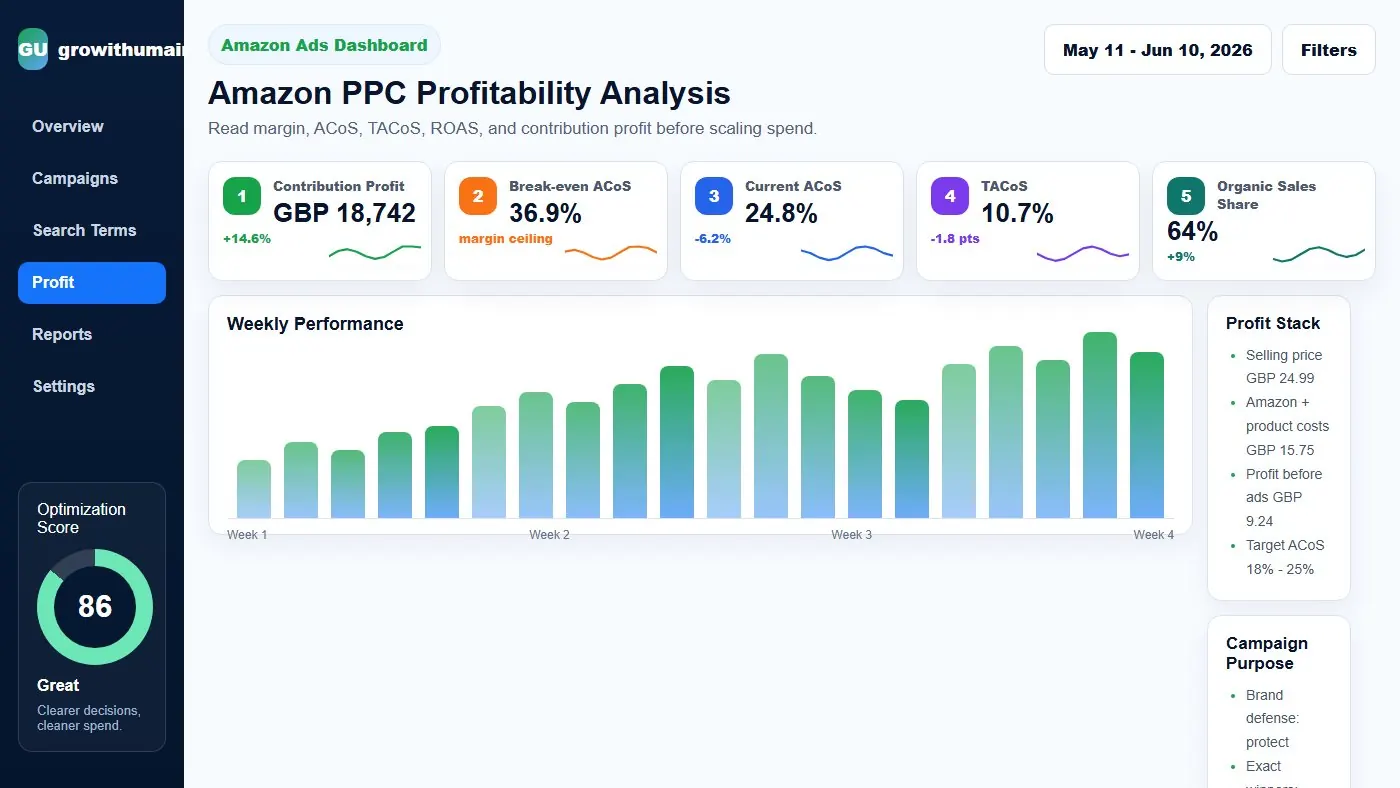
Before reviewing PPC, calculate the money left after product cost, Amazon referral fee, FBA fee, shipping, storage, discounts, refunds, and expected operational costs. That remaining amount is the ceiling PPC can work inside.
If a product sells for GBP 24.99 and total product plus Amazon costs are GBP 15.75, the profit before ads is GBP 9.24. That means the break-even ACoS is around 36.9 percent. Spending below that can still be profitable, but target ACoS should usually be lower because the business still needs net profit.
Profit metrics that matter
| Metric | What it tells you | How to use it |
|---|---|---|
| ACoS | Ad spend divided by ad sales | Campaign efficiency |
| ROAS | Ad sales divided by ad spend | Return view for reporting |
| TACoS | Ad spend divided by total sales | Whole account dependency on ads |
| Contribution profit | Profit after product costs and ad spend | Whether growth is worth it |
| Organic sales share | Sales not directly attributed to ads | Whether PPC is building rank |
Set target ACoS by campaign purpose
Brand defense should usually run at a lower ACoS because the shopper already knows the brand or product. Exact winner campaigns should be controlled but can carry more budget. Research, auto, broad, product targeting, and launch campaigns may run higher when they are producing useful search term data or ranking movement.
The mistake is using one target ACoS across the whole account. That forces ranking campaigns to look bad and brand campaigns to make the total account look better than it really is.
Read TACoS before making aggressive cuts
If ACoS is slightly high but TACoS is falling, the ads may be helping organic sales grow. If ACoS is low but TACoS is rising, the account may be depending too much on paid sales or losing organic visibility.
Profit review workflow
- Confirm landed cost, Amazon fees, and profit before ads for each ASIN.
- Calculate break-even ACoS and realistic target ACoS.
- Separate campaigns by purpose: defense, exact scaling, ranking, research, product targeting, and launch.
- Review ACoS beside TACoS and total sales, not alone.
- Check whether PPC is improving organic rank or only buying sales.
- Move budget from poor intent to campaigns with profit, ranking value, or useful data.
If you are increasing daily budgets without knowing break-even ACoS and TACoS direction, the account can grow revenue while losing profit.
Book PPC audit