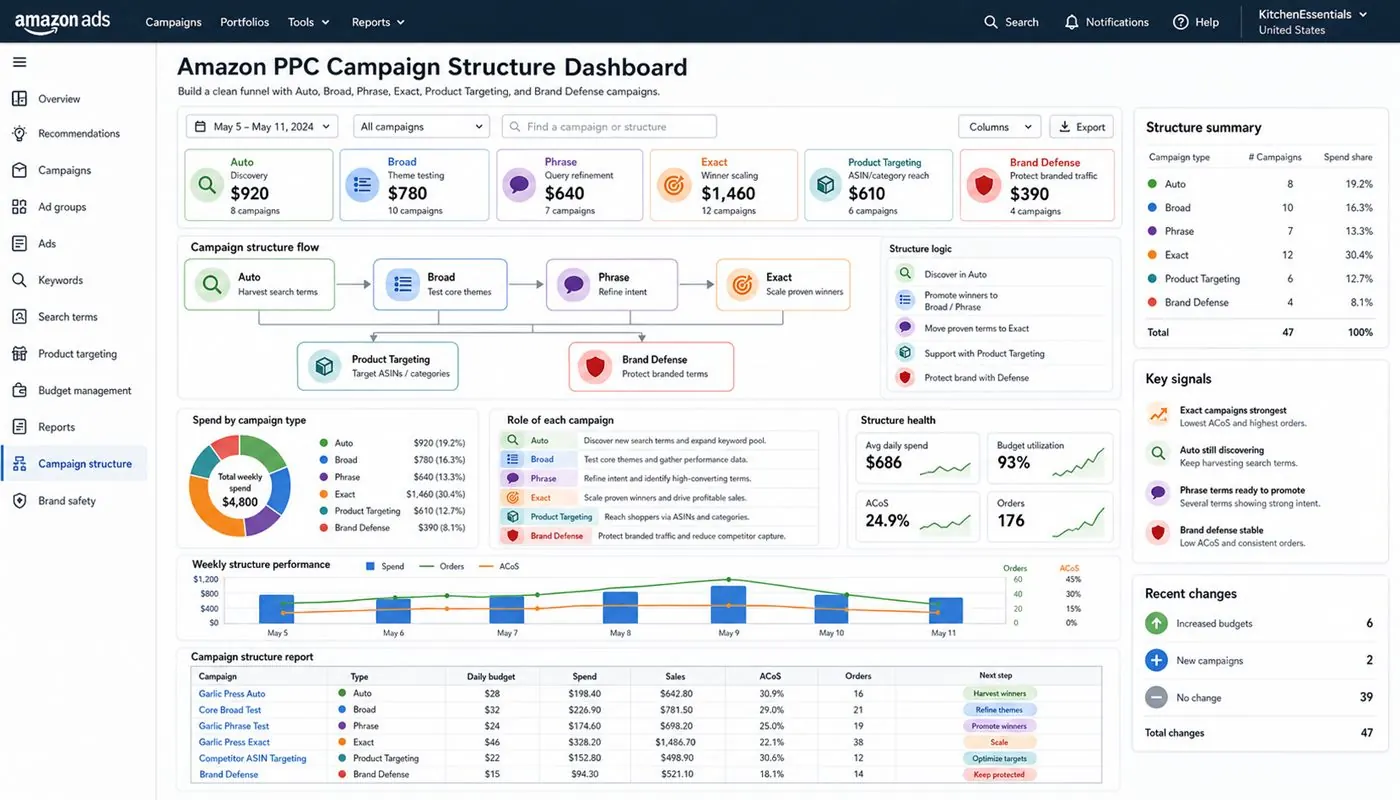
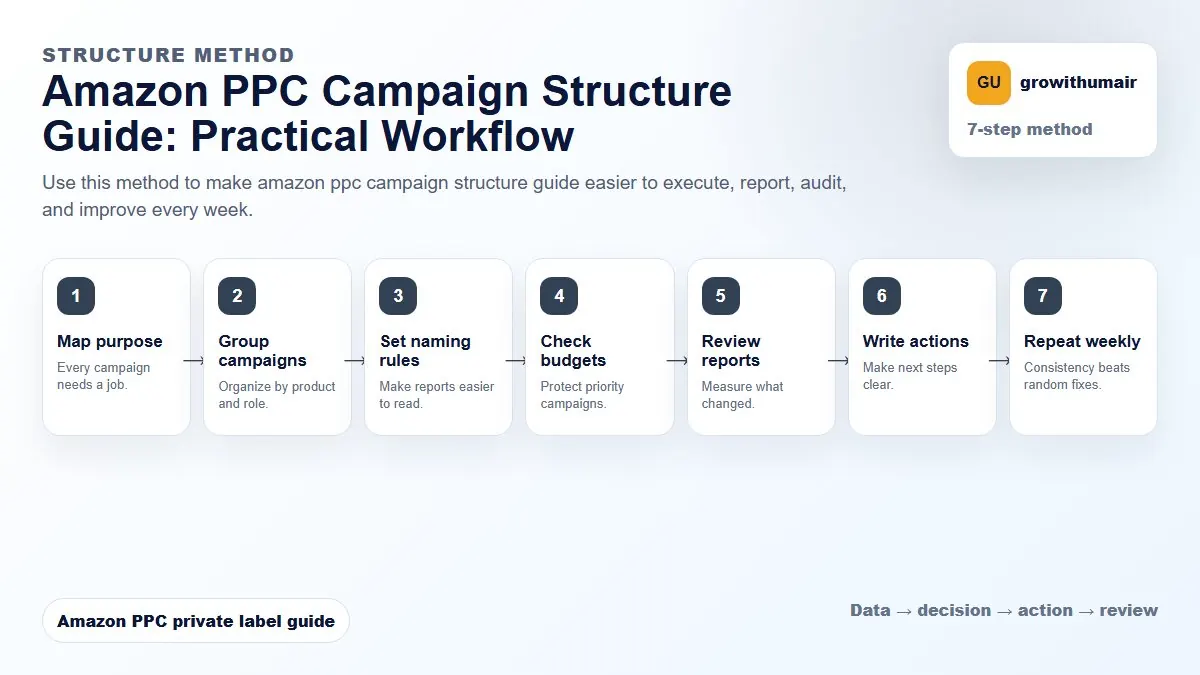
Amazon PPC Campaign Structure Guide: step-by-step method
Use this method to make amazon ppc campaign structure guide easier to execute, report, audit, and improve every week. The aim is to move from raw Amazon Ads data to a written action list: what to protect, what to reduce, what to test, and what to review again.
- 1. Map purpose: Every campaign needs a job.
- 2. Group campaigns: Organize by product and role.
- 3. Set naming rules: Make reports easier to read.
- 4. Check budgets: Protect priority campaigns.
- 5. Review reports: Measure what changed.
- 6. Write actions: Make next steps clear.
- 7. Repeat weekly: Consistency beats random fixes.
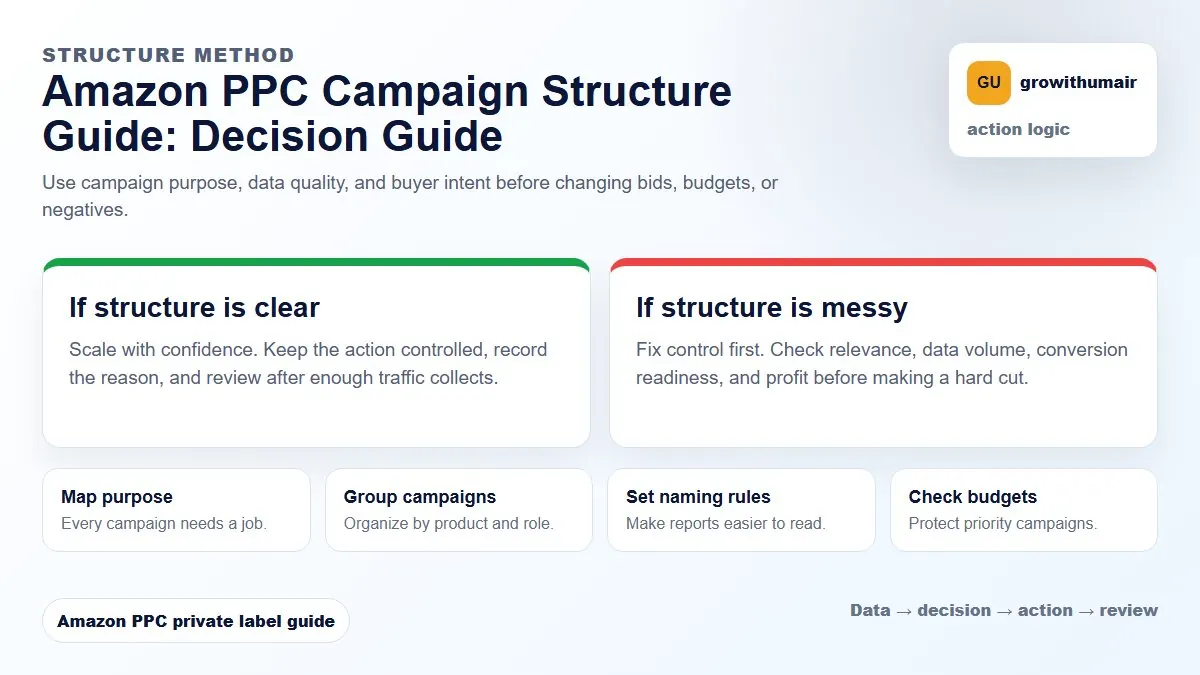
How to choose the next action
Do not treat one metric as the whole answer. For every change, read the metric beside campaign purpose, search intent, listing readiness, rank movement, and profit. This prevents cutting useful traffic just because one report looks uncomfortable.
The main principle
Each campaign should have one clear job. If auto research, exact ranking, product targeting, and brand defense all live in the same structure, it becomes hard to know what to scale, what to pause, and what to protect.
A practical campaign map
| Campaign bucket | Purpose | Optimization focus |
|---|---|---|
| Auto research | Find search terms and ASIN targets. | Harvest winners, block irrelevant spend. |
| Broad and phrase | Explore keyword variations. | Control bids and move converting terms to exact. |
| Exact scale | Push proven terms. | ACoS, rank, conversion, budget availability. |
| Product targeting | Attack competitor pages and defend own ASINs. | ASIN relevance, price gap, reviews, conversion. |
| Brand defense | Protect branded searches. | Low ACoS and impression coverage. |
Where ranking campaigns fit
Ranking campaigns should focus on a controlled set of priority keywords. They need separate budgets because their job is not the same as a harvesting campaign. Watch sponsored rank, organic rank, TACoS, conversion rate, and total sales movement.
Use a naming system
Name campaigns so anyone can understand product, match type, purpose, marketplace, and stage. For example: PL_Product_Exact_Rank_US. Good naming reduces mistakes and makes reporting easier.
Campaign structure does not lower ACoS by itself. It gives you the control needed to lower waste without hurting the campaigns that are actually helping rank and revenue.