Amazon PPC Audit Checklist: step-by-step method
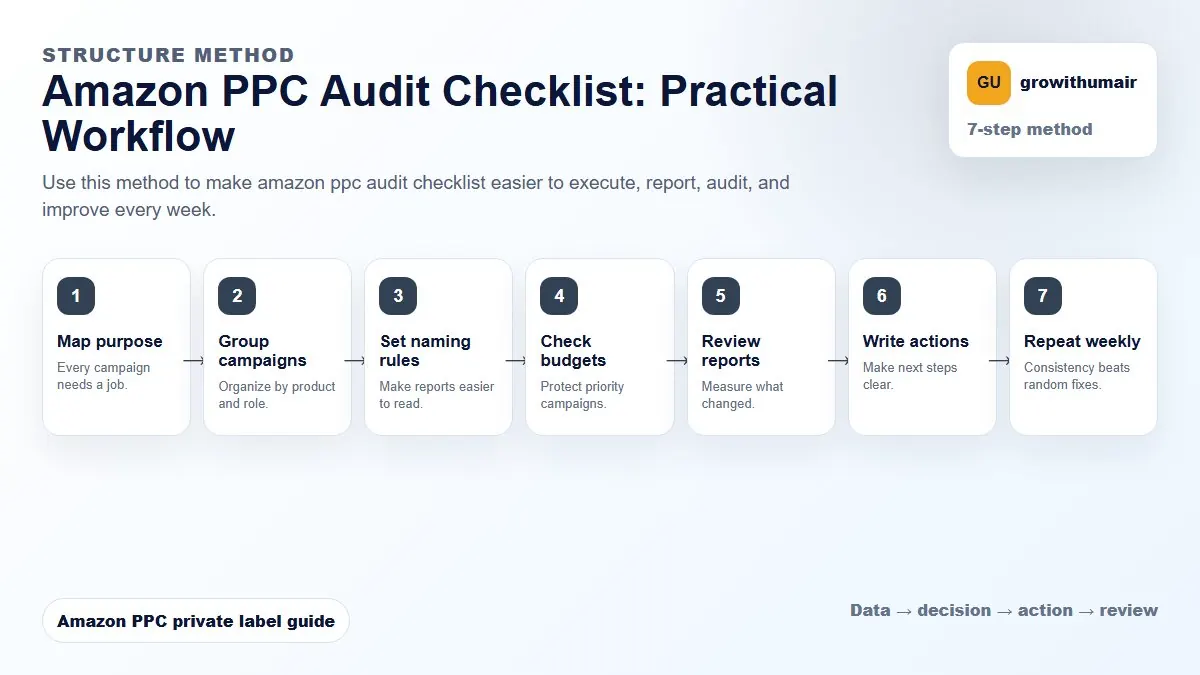
Use this method to make amazon ppc audit checklist easier to execute, report, audit, and improve every week. The aim is to move from raw Amazon Ads data to a written action list: what to protect, what to reduce, what to test, and what to review again.
- 1. Map purpose: Every campaign needs a job.
- 2. Group campaigns: Organize by product and role.
- 3. Set naming rules: Make reports easier to read.
- 4. Check budgets: Protect priority campaigns.
- 5. Review reports: Measure what changed.
- 6. Write actions: Make next steps clear.
- 7. Repeat weekly: Consistency beats random fixes.
How to choose the next action
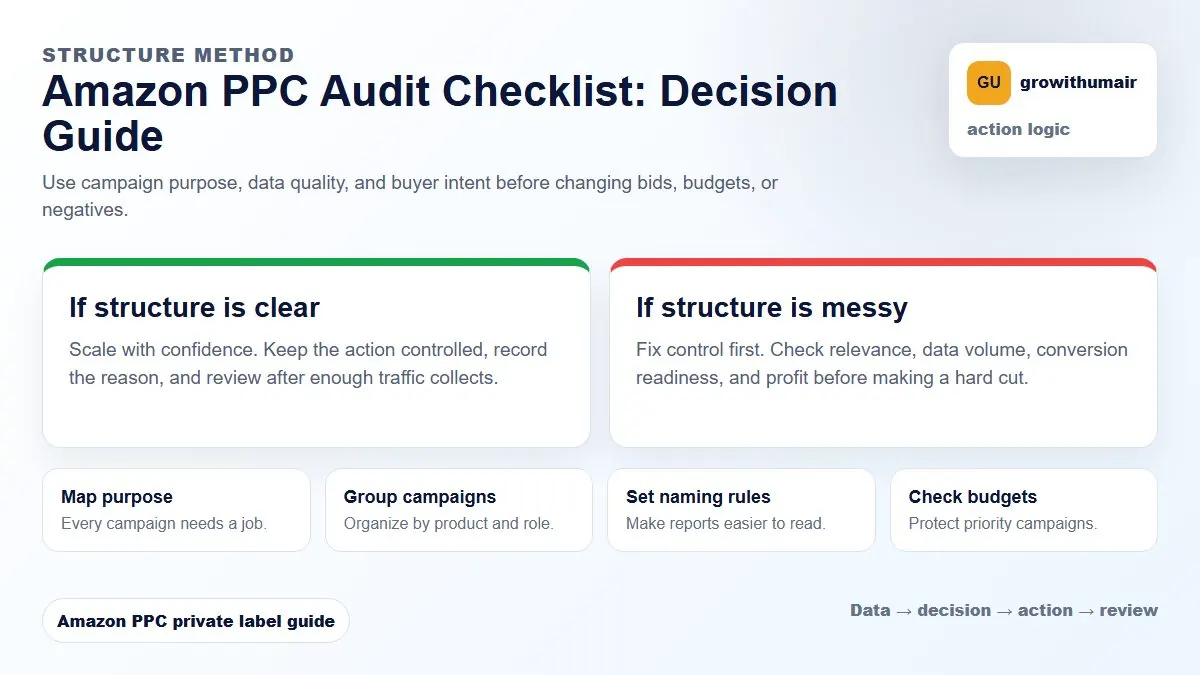
Do not treat one metric as the whole answer. For every change, read the metric beside campaign purpose, search intent, listing readiness, rank movement, and profit. This prevents cutting useful traffic just because one report looks uncomfortable.
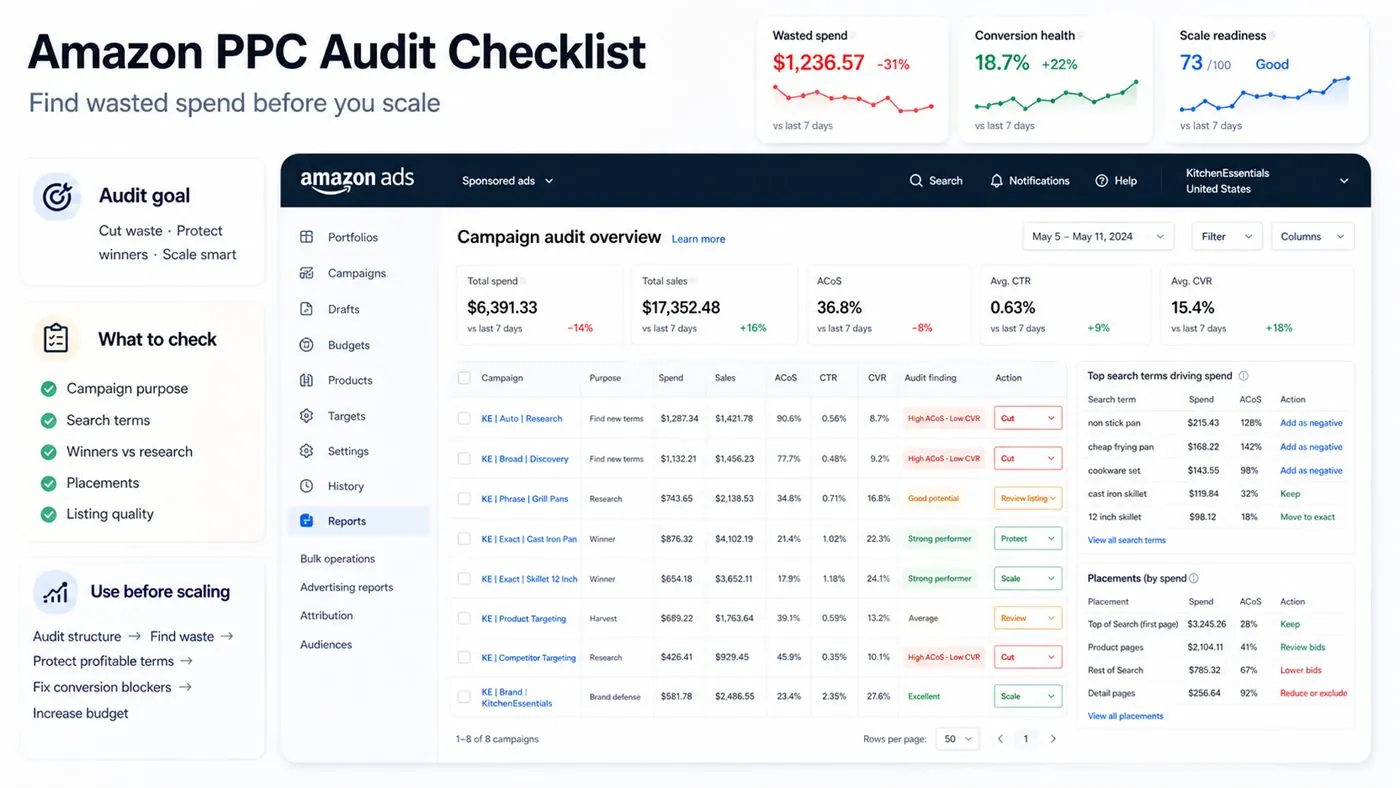
A PPC audit should explain what to cut, what to protect, and what to scale. The best audit is not a long list of issues; it is a short action plan tied to spend, ranking, conversion, and profit.
1. Check campaign purpose
Every campaign should have a clear job: research, ranking, brand defense, competitor targeting, exact keyword scaling, or remarketing. If one campaign is doing everything, reporting becomes unclear.
2. Read search terms
Look for irrelevant clicks, broad matches spending without orders, duplicate targets, and keywords that receive spend but do not support rank or sales quality.
3. Separate winners from research
Profitable exact targets should not be trapped inside research campaigns. Move proven keywords into cleaner structures where bids and budgets can be controlled properly.
4. Review placements
Top of search can be powerful, but only if conversion supports it. Product pages and rest-of-search placements should be judged by ACoS, CPC, conversion rate, and order quality.
5. Connect PPC to listing quality
If CTR is acceptable but conversion is weak, the problem may not be bidding. The listing, price, reviews, offer, or images may be holding the campaign back.