Amazon Sponsored Brands PPC Guide: step-by-step method
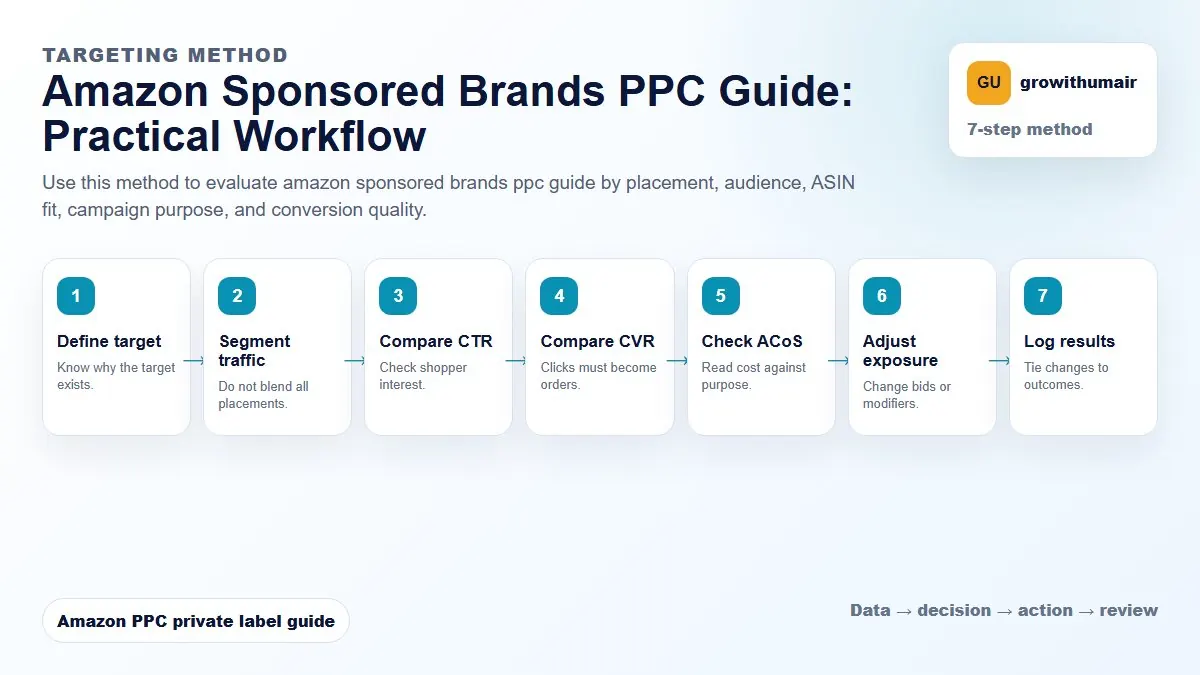
Use this method to evaluate amazon sponsored brands ppc guide by placement, audience, ASIN fit, campaign purpose, and conversion quality. The aim is to move from raw Amazon Ads data to a written action list: what to protect, what to reduce, what to test, and what to review again.
- 1. Define target: Know why the target exists.
- 2. Segment traffic: Do not blend all placements.
- 3. Compare CTR: Check shopper interest.
- 4. Compare CVR: Clicks must become orders.
- 5. Check ACoS: Read cost against purpose.
- 6. Adjust exposure: Change bids or modifiers.
- 7. Log results: Tie changes to outcomes.
How to choose the next action
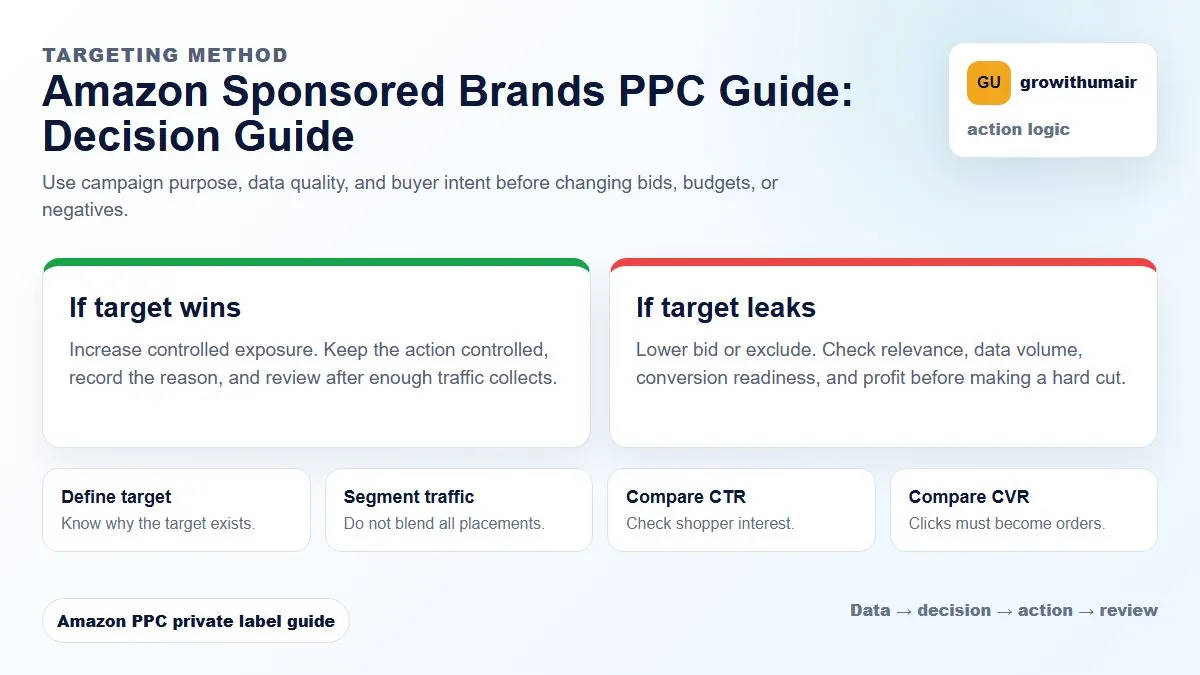
Do not treat one metric as the whole answer. For every change, read the metric beside campaign purpose, search intent, listing readiness, rank movement, and profit. This prevents cutting useful traffic just because one report looks uncomfortable.
When Sponsored Brands make sense
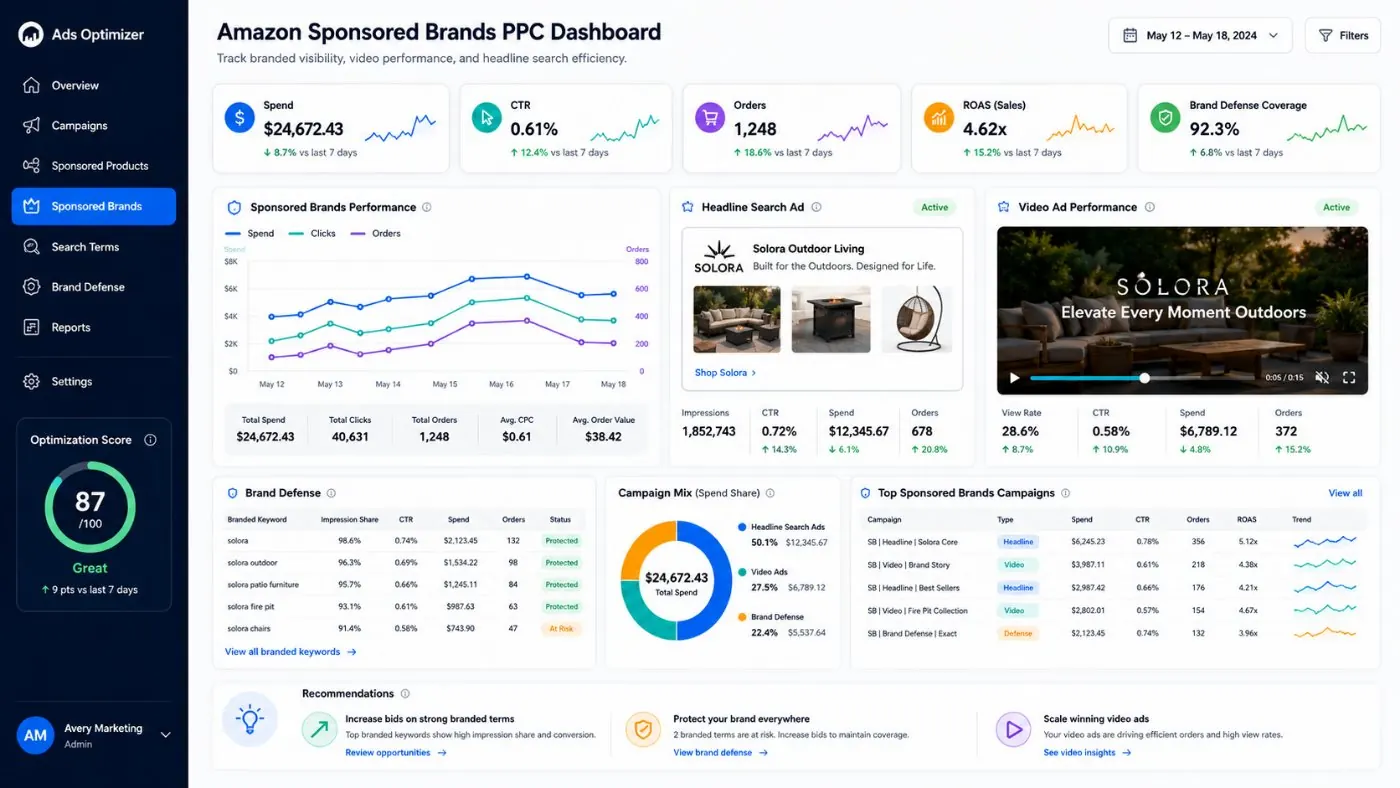
Sponsored Brands work best when the brand has a clear offer and more than one product or variation to show. They are useful for brand defense, category visibility, seasonal pushes, video placements, and driving shoppers to a Store or product collection.
Sponsored Brands are not a replacement for Sponsored Products
Sponsored Products usually carry more direct conversion intent. Sponsored Brands often work higher in the funnel. That means you should judge them with CTR, new-to-brand context, Store behavior, product page conversion, and total account movement, not only ACoS.
| Sponsored Brands use | Best goal | Metric to watch |
|---|---|---|
| Brand defense | Protect branded searches | ACoS, CPC, impression share |
| Video ads | Win attention on priority terms | CTR, CVR, sales, rank |
| Category visibility | Introduce product line | CTR, orders, Store engagement |
| Launch support | Build awareness | Clicks, conversion, keyword rank |
Creative matters more here
Sponsored Brands expose your headline, logo, product images, and sometimes video. If the message is generic, the campaign will struggle. Use benefit-led copy, clear product selection, and a landing path that matches the search intent.
How to structure Sponsored Brands campaigns
- Separate brand defense from non-branded discovery.
- Create dedicated campaigns for video if video assets are strong.
- Group keywords by intent instead of putting every term into one campaign.
- Keep budgets smaller while learning CTR and conversion patterns.
- Review search terms and placement behavior weekly.
Common mistakes
Many sellers launch Sponsored Brands with weak headlines, poor product selection, and broad keywords. The result is high spend and low conversion. Start narrow, test message quality, and expand only after CTR and conversion prove the angle.
Use them when they support brand defense, category authority, video proof, or launch visibility. Do not run them just because the ad type is available.