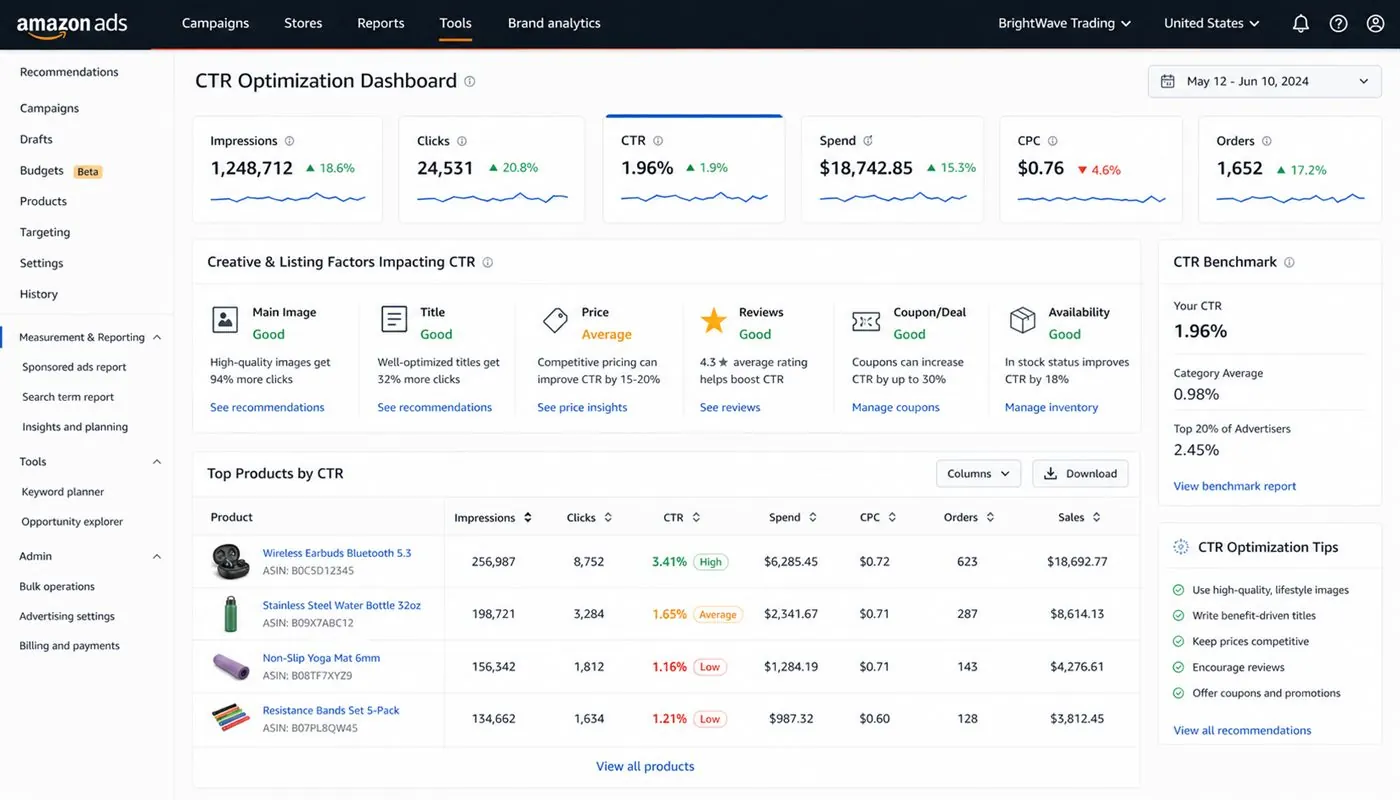
Amazon PPC CTR Optimization Guide: step-by-step method
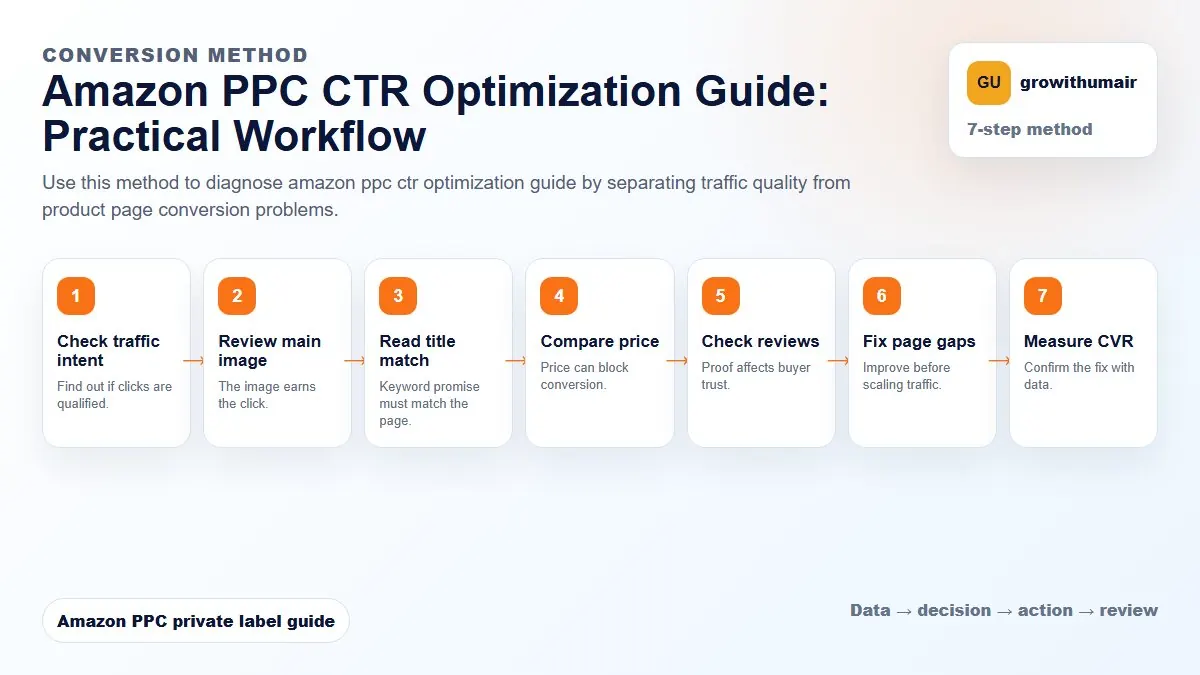
Use this method to diagnose amazon ppc ctr optimization guide by separating traffic quality from product page conversion problems. The aim is to move from raw Amazon Ads data to a written action list: what to protect, what to reduce, what to test, and what to review again.
- 1. Check traffic intent: Find out if clicks are qualified.
- 2. Review main image: The image earns the click.
- 3. Read title match: Keyword promise must match the page.
- 4. Compare price: Price can block conversion.
- 5. Check reviews: Proof affects buyer trust.
- 6. Fix page gaps: Improve before scaling traffic.
- 7. Measure CVR: Confirm the fix with data.
How to choose the next action
Do not treat one metric as the whole answer. For every change, read the metric beside campaign purpose, search intent, listing readiness, rank movement, and profit. This prevents cutting useful traffic just because one report looks uncomfortable.
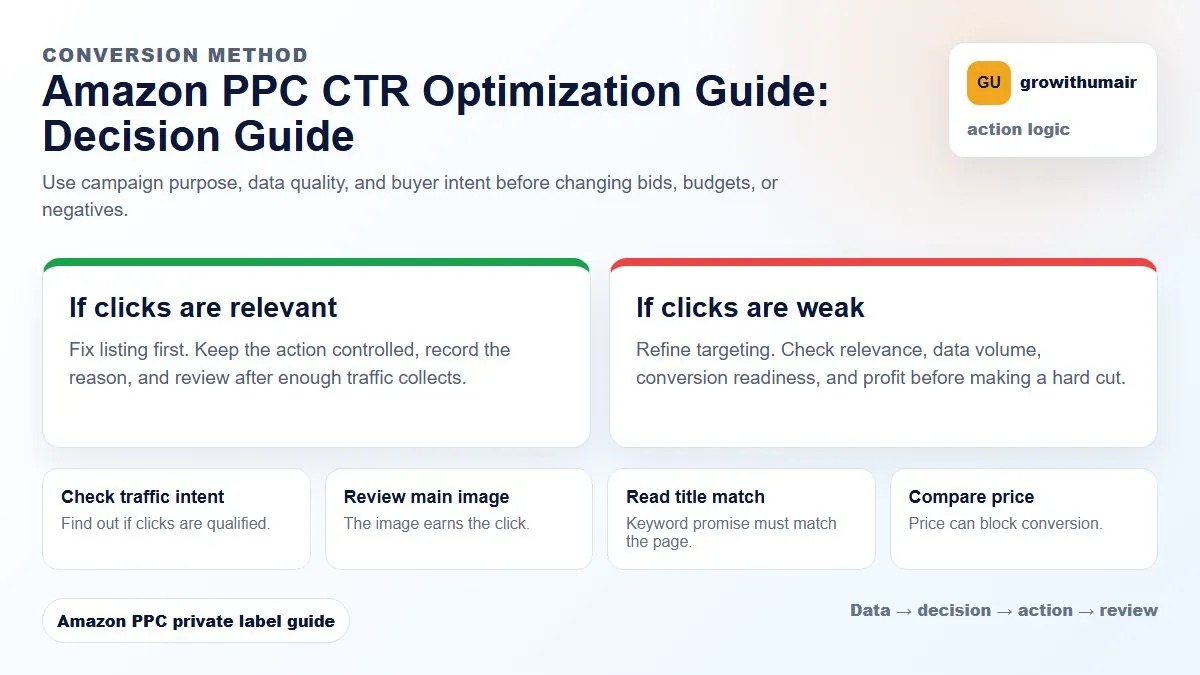
If impressions are high and clicks are low, Amazon is showing the ad, but shoppers are choosing other products. Fix relevance and offer signals before simply increasing bids.
What CTR tells you in Amazon PPC
Click-through rate is clicks divided by impressions. It shows how often shoppers click your ad after seeing it. A weak CTR does not always mean the campaign is bad, but it does mean the ad is failing to win attention in that placement or search environment.
CTR must be read by campaign type. A branded defensive campaign should usually have stronger CTR than a broad research campaign. A product targeting campaign may have lower CTR because shoppers are comparing detail pages. Do not judge every campaign by one number.
The biggest CTR drivers
| Signal | How it affects CTR | What to check |
|---|---|---|
| Main image | First visual reason to click | Clear product, strong scale, no clutter |
| Title | Confirms relevance to the query | Main keyword visible early |
| Price | Creates or removes friction | Compare against top competitors |
| Reviews | Builds trust before the click | Rating and count beside alternatives |
| Coupon | Adds a visual reason to choose you | Use when margin allows |
Start with search term relevance
Before changing the listing, check whether your ads are appearing for the right queries. A garlic press ad shown for "garlic storage jar" will naturally have weak CTR. Sort the search term report by impressions and look for queries with high impressions, low clicks, and poor relevance.
Irrelevant impressions can come from broad match, loose auto campaigns, category targeting, or competitor ASINs that do not match your offer. Add negatives carefully, then review whether CTR improves over the next review window.
Fix the listing signals that appear before the click
Shoppers usually see the main image, title, price, rating, review count, coupon, and delivery promise before they click. If competitors look sharper, cheaper, or more trusted, your ad may lose the click even with a strong bid.
The main image should make the product obvious at small size. The title should place the primary search phrase early without sounding stuffed. Coupons can lift CTR when the product is price-sensitive, but they should not hide poor positioning. Read the listing optimization guide for a deeper listing checklist.
When low CTR is acceptable
Some campaigns naturally run lower CTR. Research campaigns test broad discovery. Competitor campaigns may get fewer clicks because shoppers already opened a competitor comparison. Product targeting can be more selective. The question is whether the campaign produces useful data, sales, or rank support at an acceptable cost.
If CTR is low and conversion is also poor, pause and diagnose. If CTR is low but ACoS is profitable, the campaign may still be useful. If CTR is low with no orders and high spend, stop feeding it until relevance improves.
CTR optimization workflow
- Sort campaigns by impressions and clicks.
- Find high-impression, low-click campaigns.
- Check search terms for relevance problems.
- Compare image, price, reviews, coupon, and title against page-one competitors.
- Adjust negatives, bids, placement, or listing assets based on the actual cause.
Send the ASIN and one campaign screenshot. I will identify whether the issue is targeting, placement, image, price, reviews, or listing clarity.
Book an audit