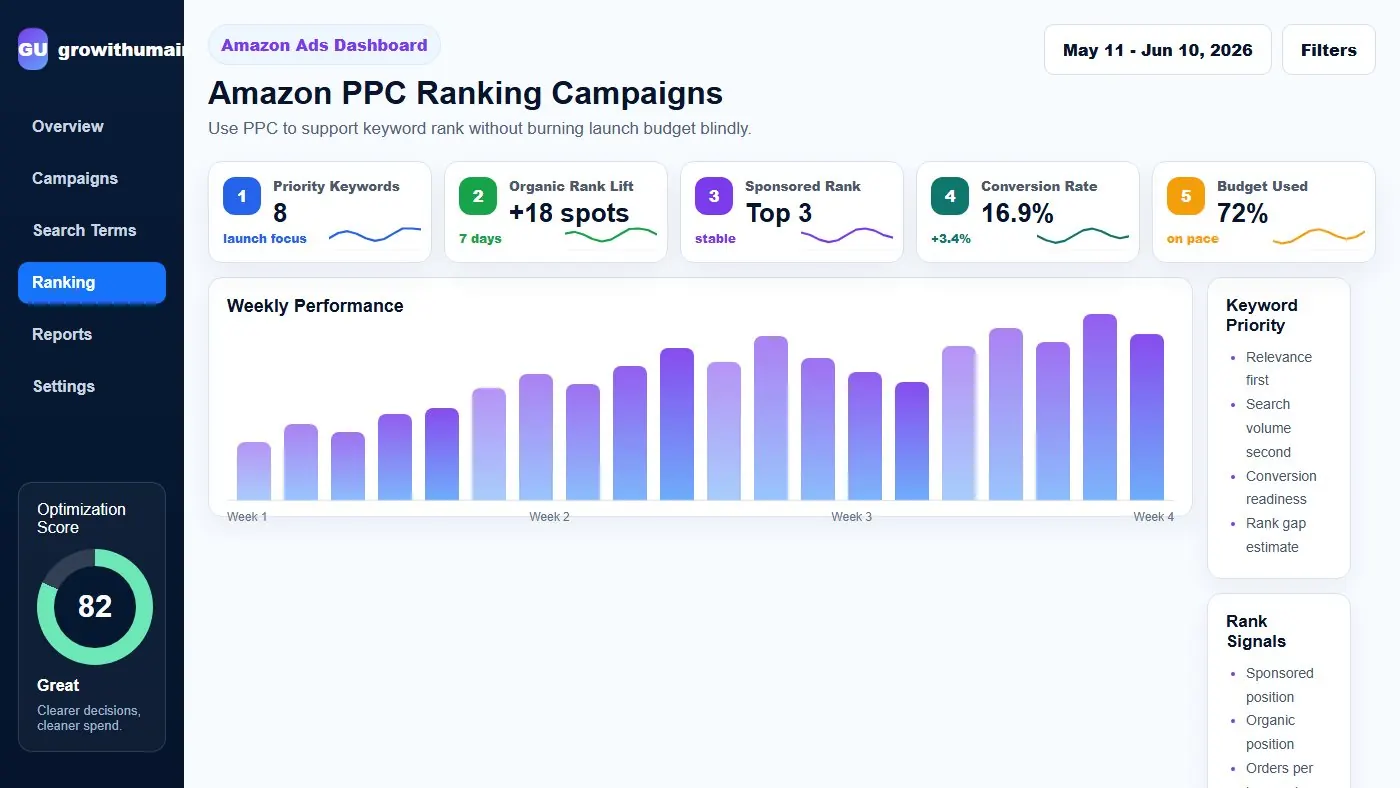
Amazon PPC Ranking Campaigns: step-by-step method
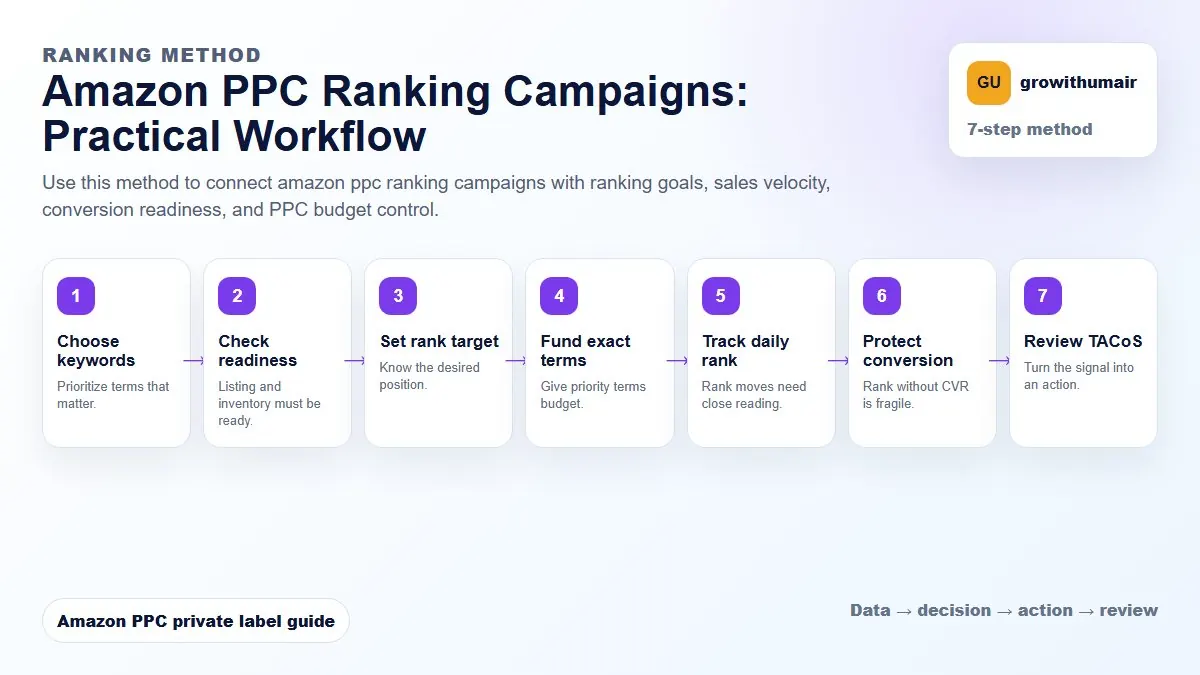
Use this method to connect amazon ppc ranking campaigns with ranking goals, sales velocity, conversion readiness, and PPC budget control. The aim is to move from raw Amazon Ads data to a written action list: what to protect, what to reduce, what to test, and what to review again.
- 1. Choose keywords: Prioritize terms that matter.
- 2. Check readiness: Listing and inventory must be ready.
- 3. Set rank target: Know the desired position.
- 4. Fund exact terms: Give priority terms budget.
- 5. Track daily rank: Rank moves need close reading.
- 6. Protect conversion: Rank without CVR is fragile.
- 7. Review TACoS: Turn the signal into an action.
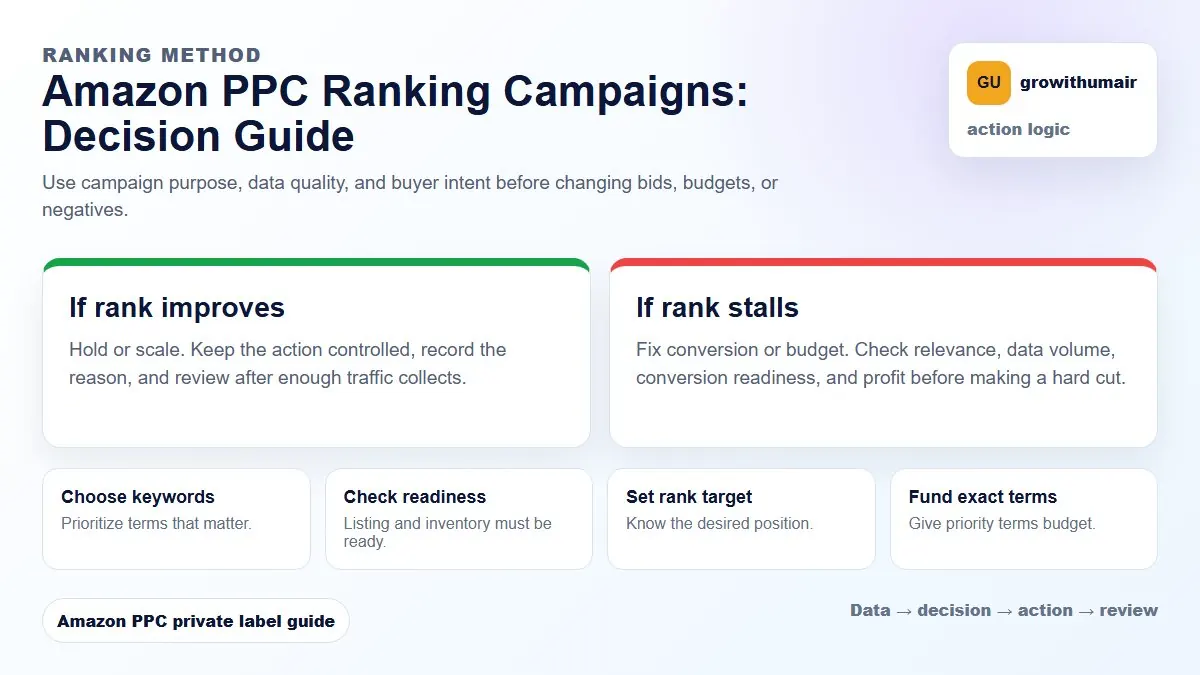
How to choose the next action
Do not treat one metric as the whole answer. For every change, read the metric beside campaign purpose, search intent, listing readiness, rank movement, and profit. This prevents cutting useful traffic just because one report looks uncomfortable.
PPC can create visibility and sales velocity, but it cannot save a listing that is not relevant or competitive for the keyword being pushed.
Choose keywords by relevance and commercial intent
A ranking campaign should not target every high-volume keyword. The best keyword is one the product can realistically convert for, where ranking would bring qualified traffic and profitable long-term sales.
Start with the main buying phrase, close variants, and terms that already show clicks, carts, or orders in Search Query Performance or the search term report. Avoid keywords where the product does not match the shopper expectation.
Track sponsored rank and organic rank separately
Sponsored rank shows where ads appear. Organic rank shows whether Amazon is rewarding the product with unpaid visibility. A campaign can look successful in ads while organic rank stays stuck. That usually means sales velocity, conversion, price, reviews, or relevance is not strong enough yet.
| Signal | Good sign | Warning sign |
|---|---|---|
| Sponsored rank | Ad appears consistently for target keyword | Budget runs out or bids cannot win visibility |
| Organic rank | Moves upward after sales activity | No movement after enough orders |
| Conversion rate | Stable or improving for the keyword | Clicks rise but orders do not |
| TACoS | Improves after rank gains | Ad dependency keeps rising |
Build ranking campaigns with control
Use exact match for the main ranking keyword so you can control bids, budget, placement, and reporting. Keep broad or phrase discovery separate. If you mix research and ranking in the same campaign, you will not know whether spend is building rank or simply exploring traffic.
Budget must survive the ranking window
A ranking campaign that runs out early can lose the visibility window it needs. If the keyword is a real priority, budget should be planned around expected CPC, target clicks, conversion rate, and the sales velocity required to move rank.
Do not rank before the listing is ready
Before spending on rank, check main image, price, coupon, reviews, title relevance, bullet clarity, A+ content, inventory, and delivery promise. Ranking traffic exposes weak listings quickly.
Ranking campaign workflow
- Select 3 to 10 priority keywords, not 50.
- Confirm indexing and relevance for each term.
- Set exact campaigns with clean naming and isolated budget.
- Track sponsored rank, organic rank, orders, CVR, ACoS, and TACoS daily during the push.
- Reduce spend only after reading rank movement and conversion, not only ACoS.
- Move budget toward terms that show rank movement and profitable conversion.
A good ranking plan connects PPC visibility, conversion readiness, keyword priority, and daily rank tracking.
Plan ranking campaign