Amazon Organic Ranking Factors: step-by-step method
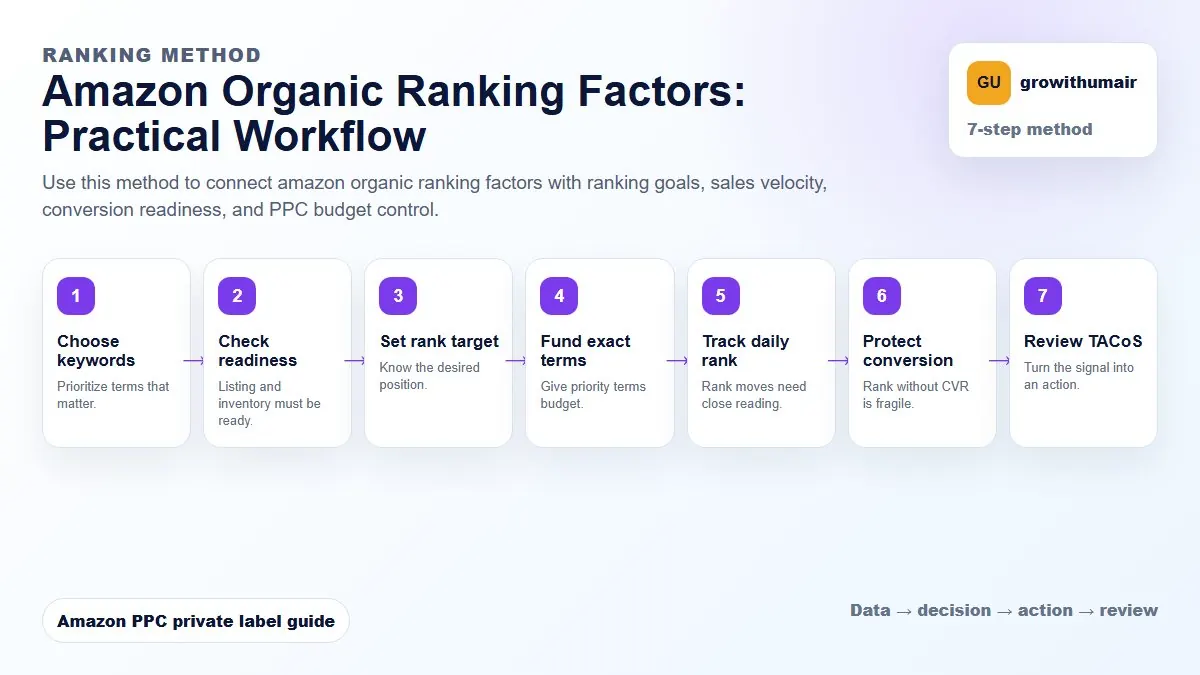
Use this method to connect amazon organic ranking factors with ranking goals, sales velocity, conversion readiness, and PPC budget control. The aim is to move from raw Amazon Ads data to a written action list: what to protect, what to reduce, what to test, and what to review again.
- 1. Choose keywords: Prioritize terms that matter.
- 2. Check readiness: Listing and inventory must be ready.
- 3. Set rank target: Know the desired position.
- 4. Fund exact terms: Give priority terms budget.
- 5. Track daily rank: Rank moves need close reading.
- 6. Protect conversion: Rank without CVR is fragile.
- 7. Review TACoS: Turn the signal into an action.
How to choose the next action
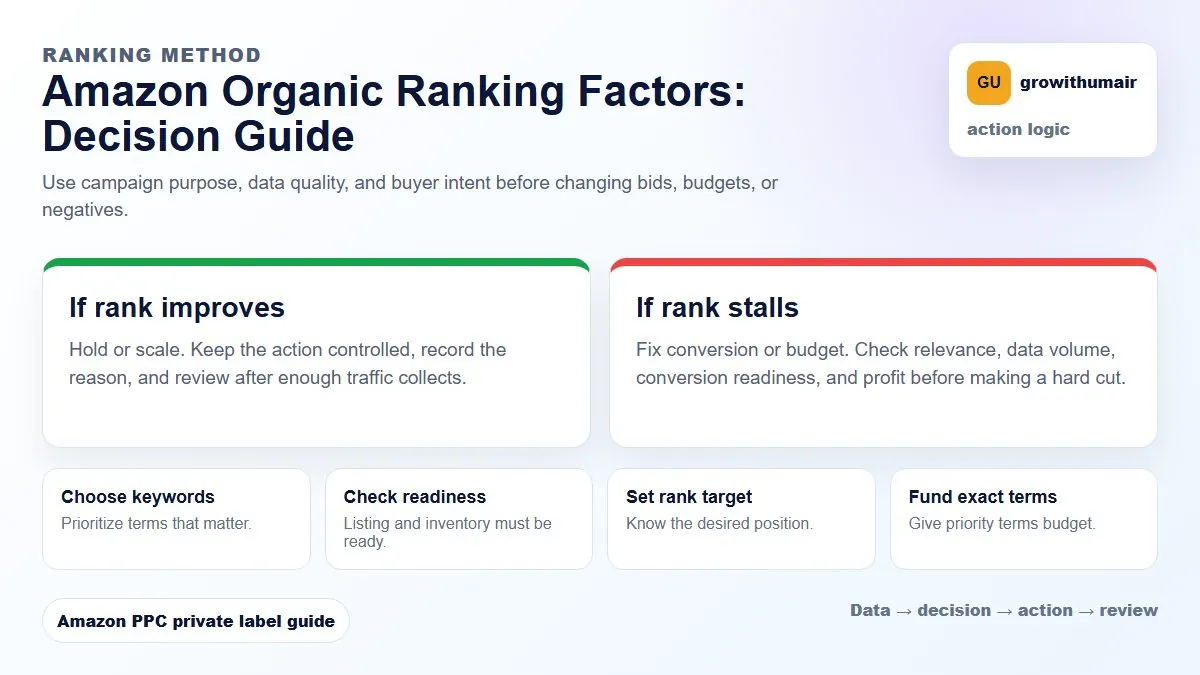
Do not treat one metric as the whole answer. For every change, read the metric beside campaign purpose, search intent, listing readiness, rank movement, and profit. This prevents cutting useful traffic just because one report looks uncomfortable.
Amazon wants to rank products that are relevant to the search and likely to convert. PPC can create the data, but the listing and offer must turn that traffic into orders.
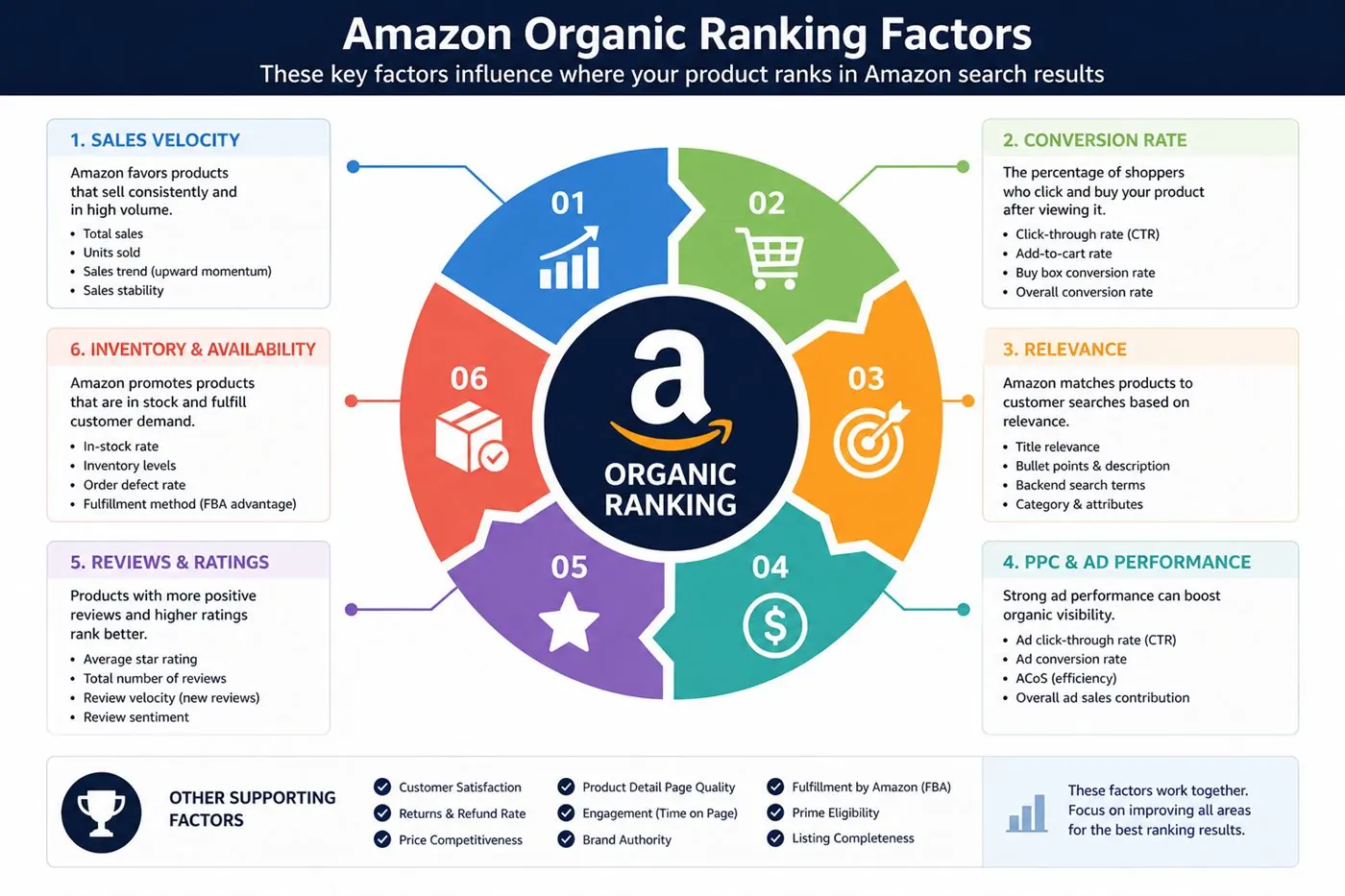
1. Keyword relevance
Amazon needs to understand what your product is. Relevance comes from the title, bullets, backend search terms, category, browse node, product type, and historical conversion on similar searches. If a keyword is missing from the listing or the product never converts for that query, ranking becomes harder.
2. Sales velocity by keyword
Organic rank is strongly connected to sales velocity. The important detail is keyword-level sales velocity, not only total sales. If a product receives orders after shoppers search a specific phrase, Amazon gets evidence that the product fits that phrase.
3. Conversion rate
High traffic with weak conversion can hurt ranking progress. Conversion depends on main image quality, price, reviews, coupon, A+ content, delivery promise, and how clearly the listing answers buyer objections. PPC should send traffic to a listing that is ready to convert.
4. PPC support
PPC can help ranking by creating impressions, clicks, and sales on target keywords. But ads do not magically create organic rank. They create the chance to prove relevance. This is why campaign structure and search term cleanup matter. Read the Amazon PPC campaign structure guide before pushing ranking spend.
5. Inventory and price stability
Stockouts, sudden price jumps, and lost Buy Box availability can break ranking momentum. Ranking work should be planned with inventory depth. If inventory is low, do not force aggressive PPC growth that creates a stockout and resets progress.
Ranking factor checklist
| Factor | What to check | Action |
|---|---|---|
| Relevance | Title, bullets, backend, category | Add priority terms naturally |
| Conversion | CTR, CVR, price, reviews | Fix offer before scaling traffic |
| Sales velocity | Orders by target keyword | Use exact ranking campaigns |
| PPC quality | Search terms and placements | Cut waste and harvest winners |
| Inventory | Days of cover | Avoid ranking pushes before stockouts |
What to do next
Choose 5 to 10 priority ranking keywords, check whether the listing is relevant for each one, then use exact PPC campaigns to create controlled sales velocity. Track sponsored rank and organic rank daily during the push. The keyword rank tracking guide explains how to read movement without overreacting.