Amazon PPC Keyword Isolation: step-by-step method
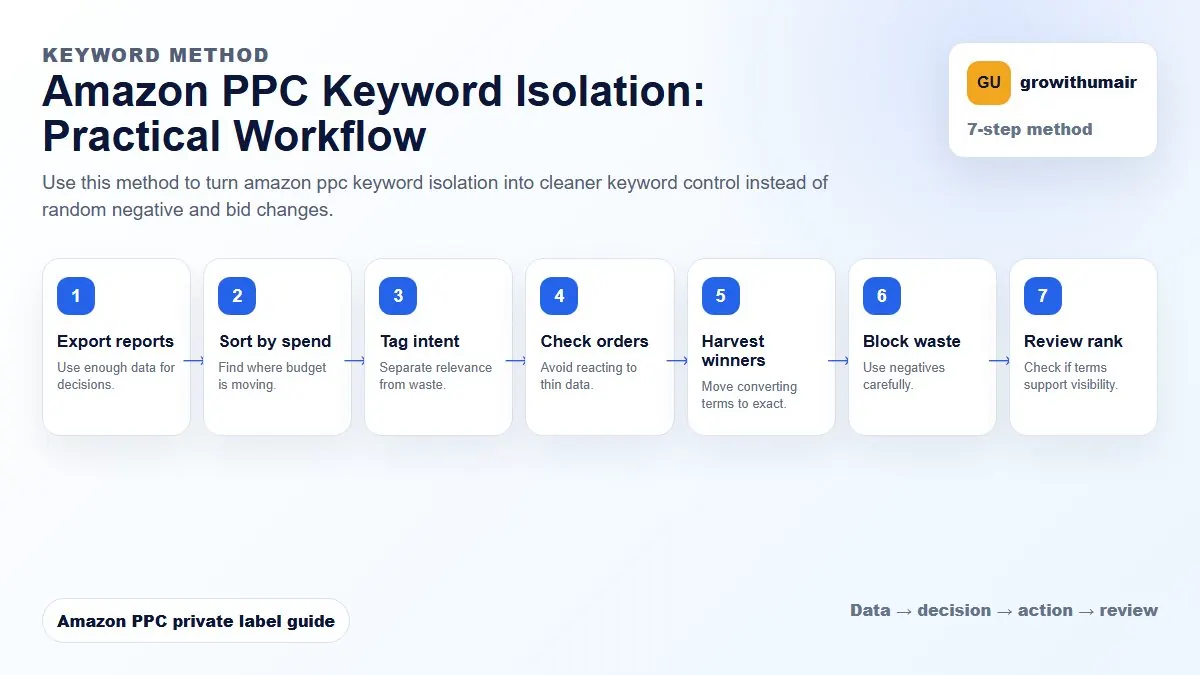
Use this method to turn amazon ppc keyword isolation into cleaner keyword control instead of random negative and bid changes. The aim is to move from raw Amazon Ads data to a written action list: what to protect, what to reduce, what to test, and what to review again.
- 1. Export reports: Use enough data for decisions.
- 2. Sort by spend: Find where budget is moving.
- 3. Tag intent: Separate relevance from waste.
- 4. Check orders: Avoid reacting to thin data.
- 5. Harvest winners: Move converting terms to exact.
- 6. Block waste: Use negatives carefully.
- 7. Review rank: Check if terms support visibility.
How to choose the next action
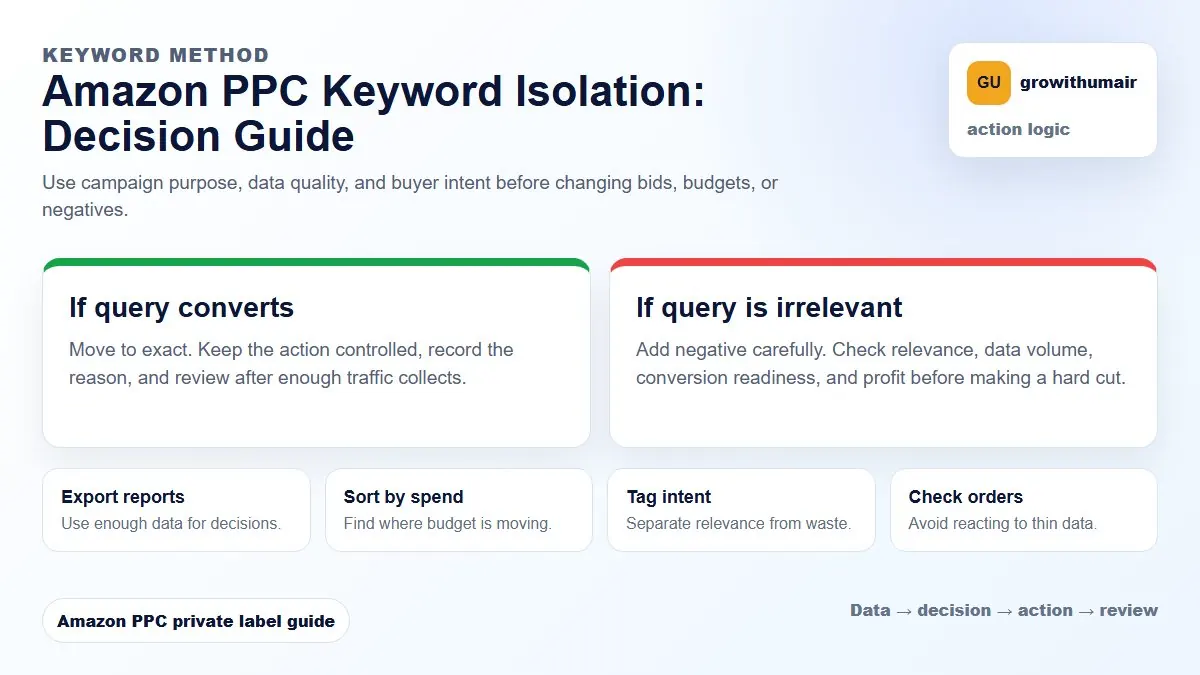
Do not treat one metric as the whole answer. For every change, read the metric beside campaign purpose, search intent, listing readiness, rank movement, and profit. This prevents cutting useful traffic just because one report looks uncomfortable.
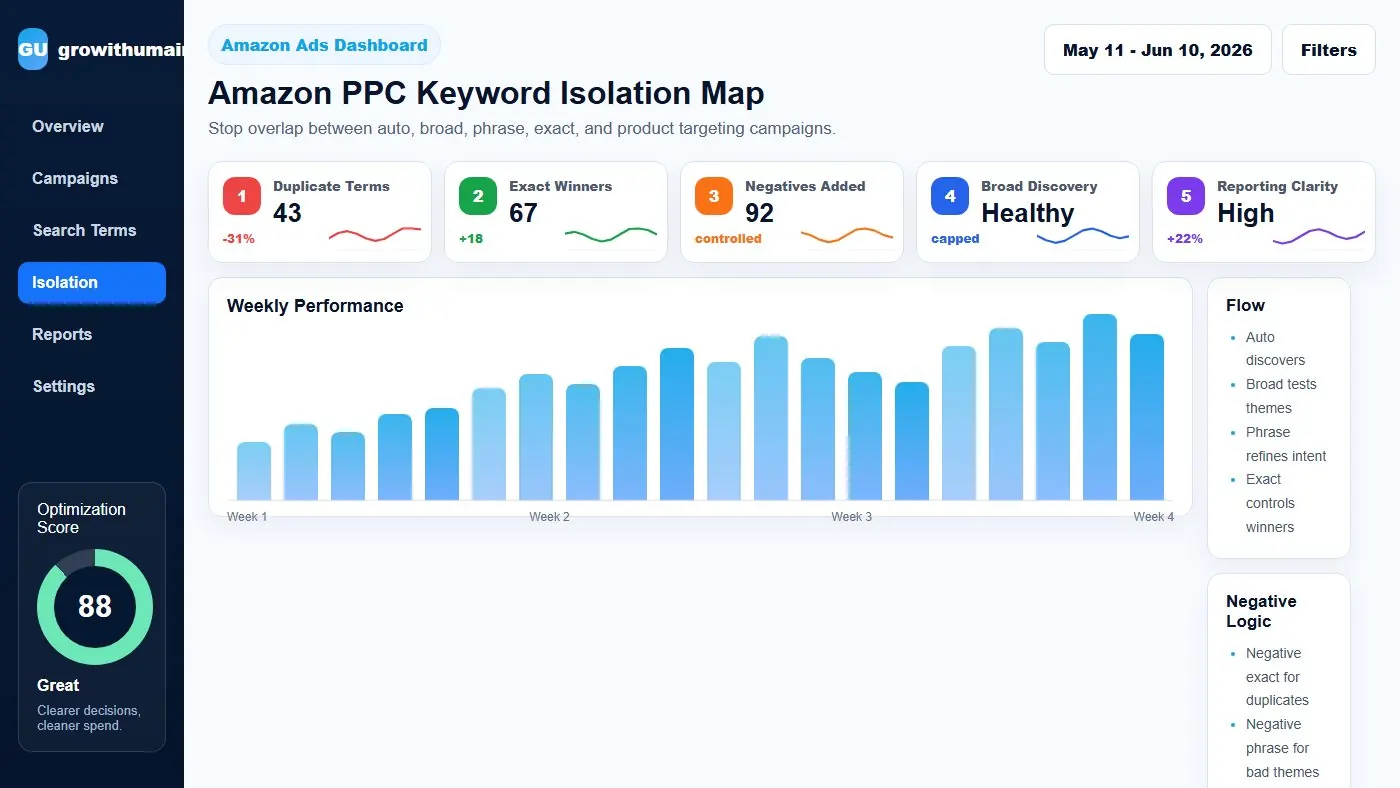
When the same search term appears in auto, broad, phrase, and exact at the same time, performance becomes harder to read and bids become harder to control.
Campaign overlap creates messy decisions
If a profitable search term is converting inside broad match, the account may look healthy, but you still do not have full control over bids, placements, budget, or ranking priority. If that same term appears in exact, phrase, and auto campaigns, the reporting can split orders across multiple places.
Use campaigns by role
| Campaign type | Role | Control level |
|---|---|---|
| Auto | Discover new search terms and ASINs | Low to medium |
| Broad | Explore themes and adjacent phrases | Medium |
| Phrase | Refine intent and test phrase families | Medium to high |
| Exact | Control proven winners and ranking terms | High |
| Product targeting | Control ASIN and category traffic | High |
Harvest winners into exact
When a search term gets enough data and shows relevance, orders, or ranking value, move it into an exact campaign. Exact campaigns make budget allocation, placement testing, bid changes, and rank tracking cleaner.
After moving the term, decide whether to add negatives in the discovery campaign. The goal is not to block all discovery, but to stop the account from paying for the same controlled term in several places.
Use negatives carefully
Negative exact blocks one specific query. Negative phrase blocks a broader theme. Use negative exact when a single query is bad. Use negative phrase when the entire phrase family is irrelevant. Overusing phrase negatives can block useful traffic and damage discovery.
Simple isolation workflow
- Export search terms for the last 14 to 30 days.
- Find terms with orders, high relevance, or ranking priority.
- Move proven terms into exact campaigns.
- Add negative exact in auto, broad, or phrase when duplicate traffic should be controlled.
- Keep research campaigns active for new discovery, but cap bids and budgets.
- Review overlap weekly so structure stays clean.
Common mistakes
The biggest mistake is isolating too early. If a term has two clicks and no orders, there is not enough information. The second mistake is isolating without checking conversion. A keyword can have high search volume but poor intent for your exact product.
Keyword isolation helps you see what is discovering, what is scaling, what is ranking, and what should be blocked.
Fix PPC structure