Amazon PPC Competitor Targeting Strategy: step-by-step method
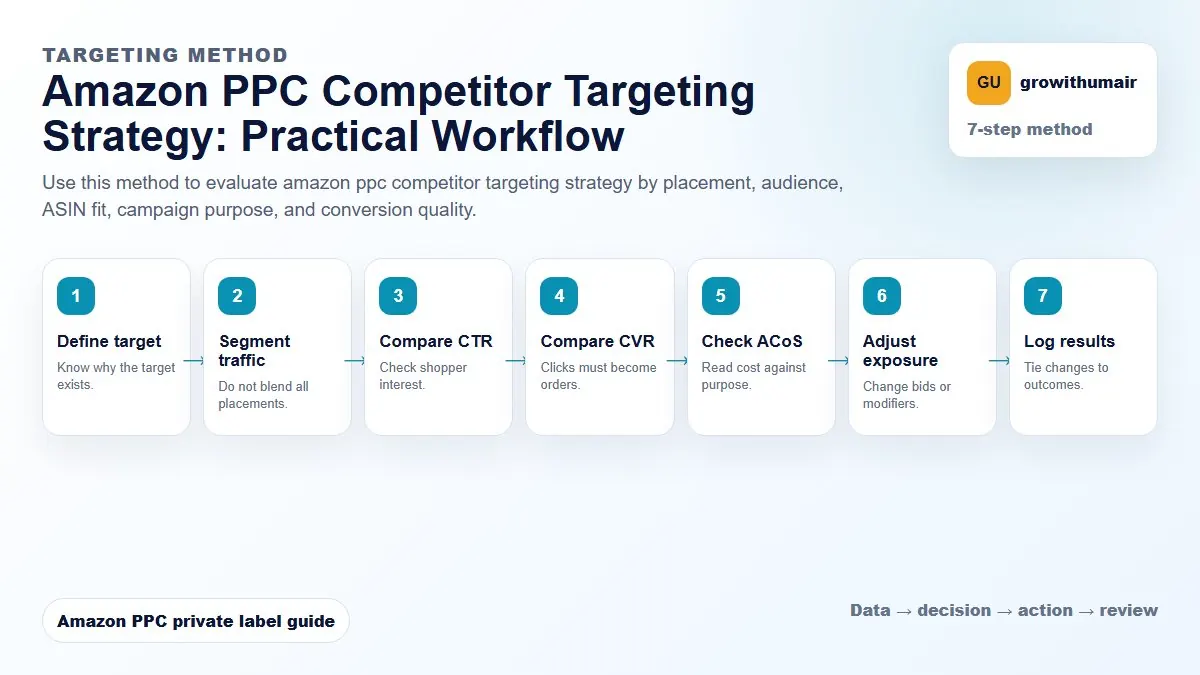
Use this method to evaluate amazon ppc competitor targeting strategy by placement, audience, ASIN fit, campaign purpose, and conversion quality. The aim is to move from raw Amazon Ads data to a written action list: what to protect, what to reduce, what to test, and what to review again.
- 1. Define target: Know why the target exists.
- 2. Segment traffic: Do not blend all placements.
- 3. Compare CTR: Check shopper interest.
- 4. Compare CVR: Clicks must become orders.
- 5. Check ACoS: Read cost against purpose.
- 6. Adjust exposure: Change bids or modifiers.
- 7. Log results: Tie changes to outcomes.
How to choose the next action
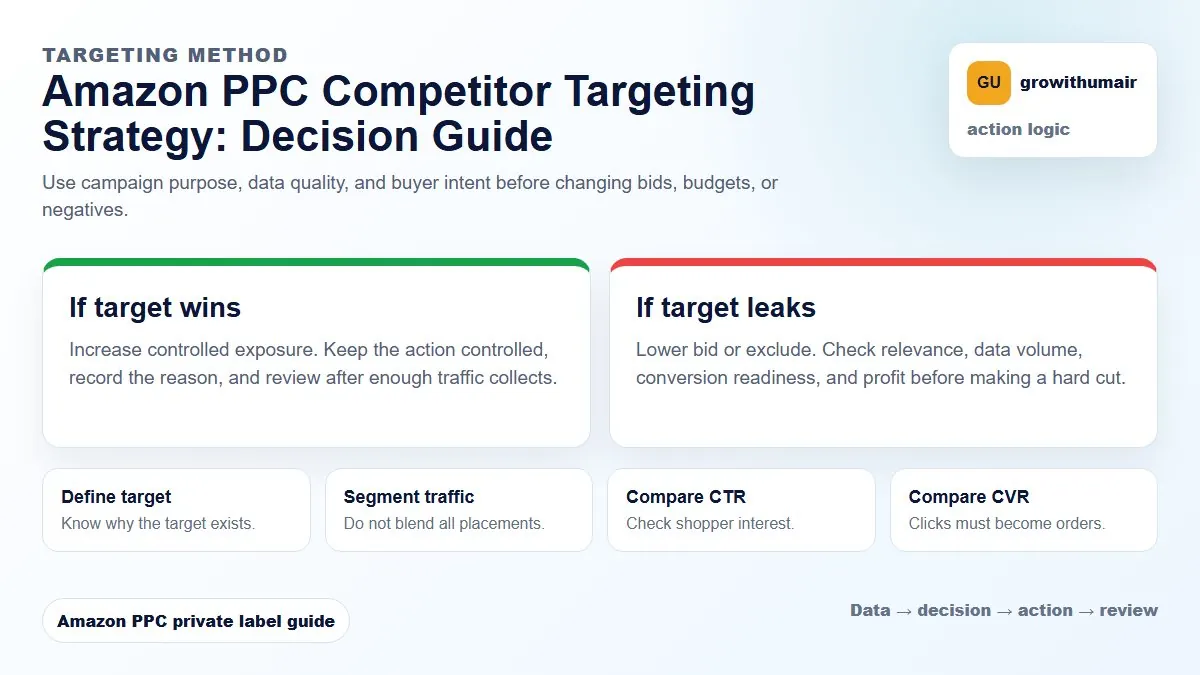
Do not treat one metric as the whole answer. For every change, read the metric beside campaign purpose, search intent, listing readiness, rank movement, and profit. This prevents cutting useful traffic just because one report looks uncomfortable.
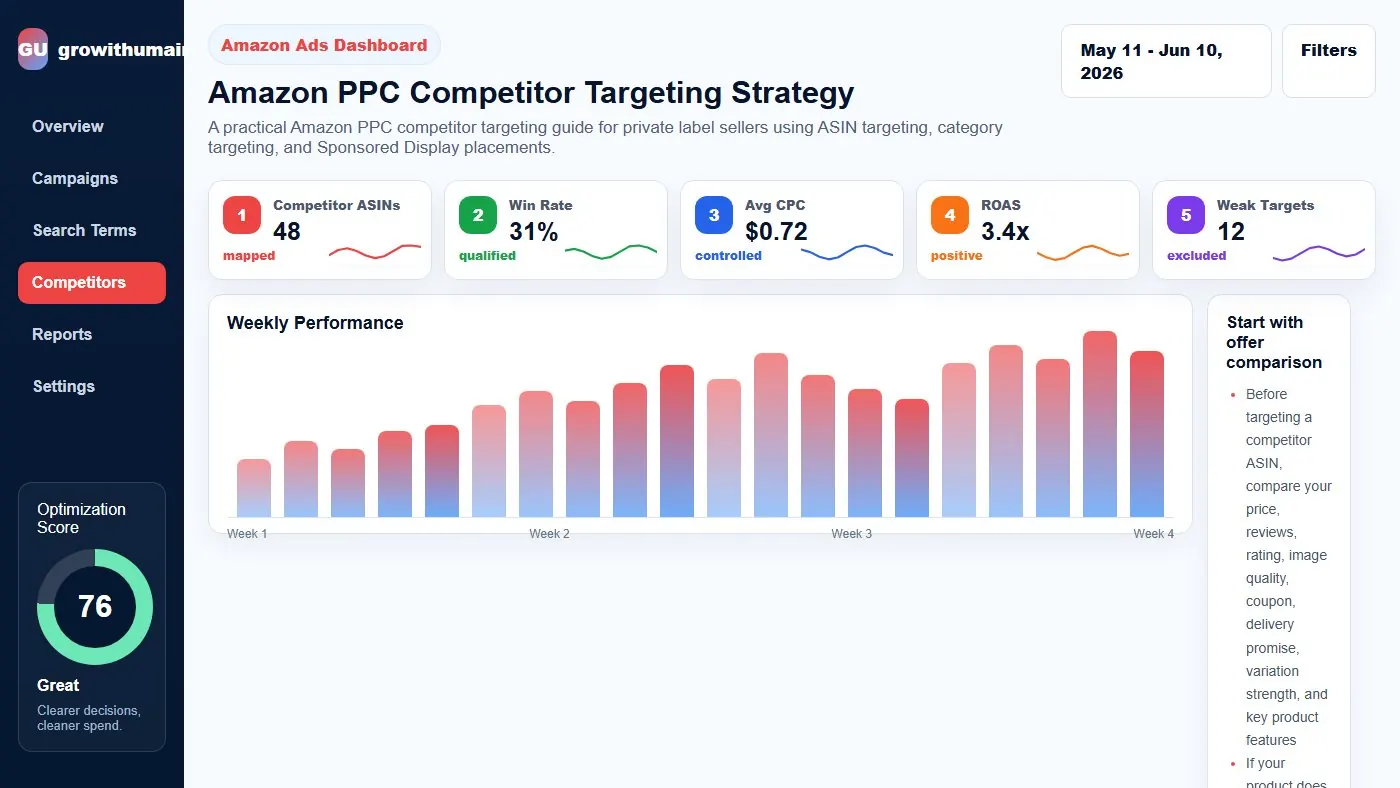
A practical Amazon PPC competitor targeting guide for private label sellers using ASIN targeting, category targeting, and Sponsored Display placements.
Start with offer comparison
Before targeting a competitor ASIN, compare your price, reviews, rating, image quality, coupon, delivery promise, variation strength, and key product features. If your product does not look like the better choice, clicks may not convert.
Competitor targeting is not only about stealing traffic. It is about appearing where your product has a believable reason to win.
Choose competitor targets carefully
Target competitors with weaker reviews, higher price, missing features, poor images, stock issues, or less relevant positioning. Avoid broad competitor lists unless you have budget to test and clean quickly.
Category targeting can help discovery, but ASIN targeting gives cleaner control.
Sponsored Products vs Sponsored Display
Sponsored Products product targeting appears in Amazon shopping placements and can drive direct comparison traffic. Sponsored Display can support broader reach, defensive campaigns, and remarketing, but it needs careful budget control.
Use separate campaigns for competitor conquesting, defensive ASINs, and category discovery.
How to judge performance
Competitor campaigns often have higher CPC and lower conversion than exact keyword winners. Judge them by product fit, placement quality, new-to-brand potential, ROAS, ACoS, and whether they expand reach profitably.
Do not keep spending on competitor ASINs that get clicks but never orders.
Optimization workflow
Review ASIN performance weekly. Increase bids on targets with orders and reasonable ACoS. Lower bids or pause ASINs with enough clicks and no conversion. Add category refinements when testing broader placements.
Practical checklist
- Review the data by campaign purpose before making changes.
- Separate discovery, ranking, defense, and exact winner campaigns.
- Check search terms, placements, budgets, conversion rate, and rank movement together.
- Write the next action clearly so the account does not drift.
- Recheck results after enough clicks and orders have collected.
Decision table
| Target type | Best use | Action |
|---|---|---|
| Weak competitor ASIN | Conquesting | Test higher bid |
| Strong competitor ASIN | Market learning | Bid cautiously |
| Own ASIN | Defense | Protect placement |
| Category target | Discovery | Use filters |
| Complementary ASIN | Cross-sell | Monitor CVR |
I can review the account, identify the first fixes, and turn the data into a clear PPC action plan.
Book PPC audit