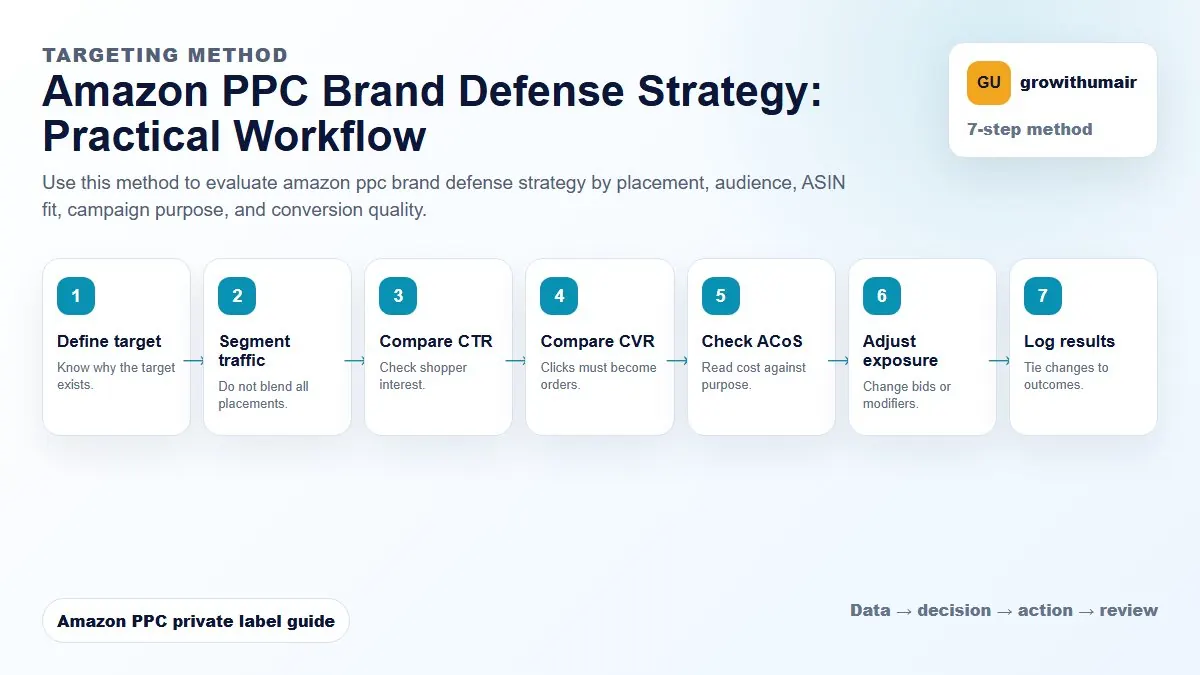
Amazon PPC Brand Defense Strategy: step-by-step method
Use this method to evaluate amazon ppc brand defense strategy by placement, audience, ASIN fit, campaign purpose, and conversion quality. The aim is to move from raw Amazon Ads data to a written action list: what to protect, what to reduce, what to test, and what to review again.
- 1. Define target: Know why the target exists.
- 2. Segment traffic: Do not blend all placements.
- 3. Compare CTR: Check shopper interest.
- 4. Compare CVR: Clicks must become orders.
- 5. Check ACoS: Read cost against purpose.
- 6. Adjust exposure: Change bids or modifiers.
- 7. Log results: Tie changes to outcomes.
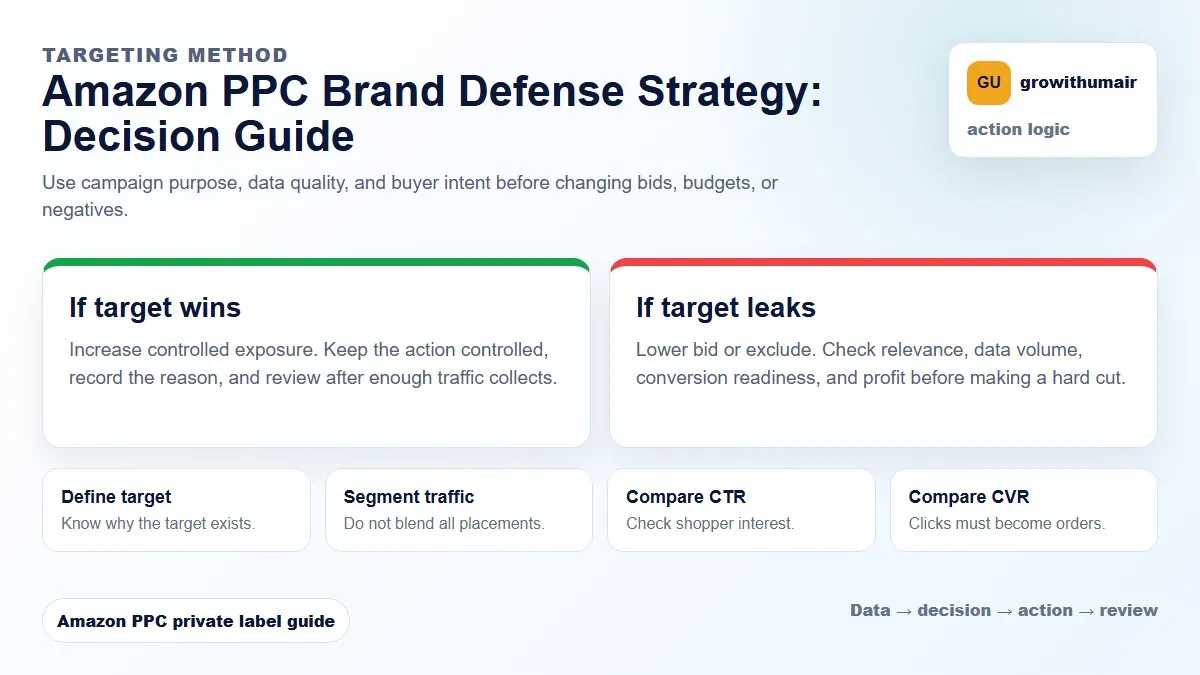
How to choose the next action
Do not treat one metric as the whole answer. For every change, read the metric beside campaign purpose, search intent, listing readiness, rank movement, and profit. This prevents cutting useful traffic just because one report looks uncomfortable.
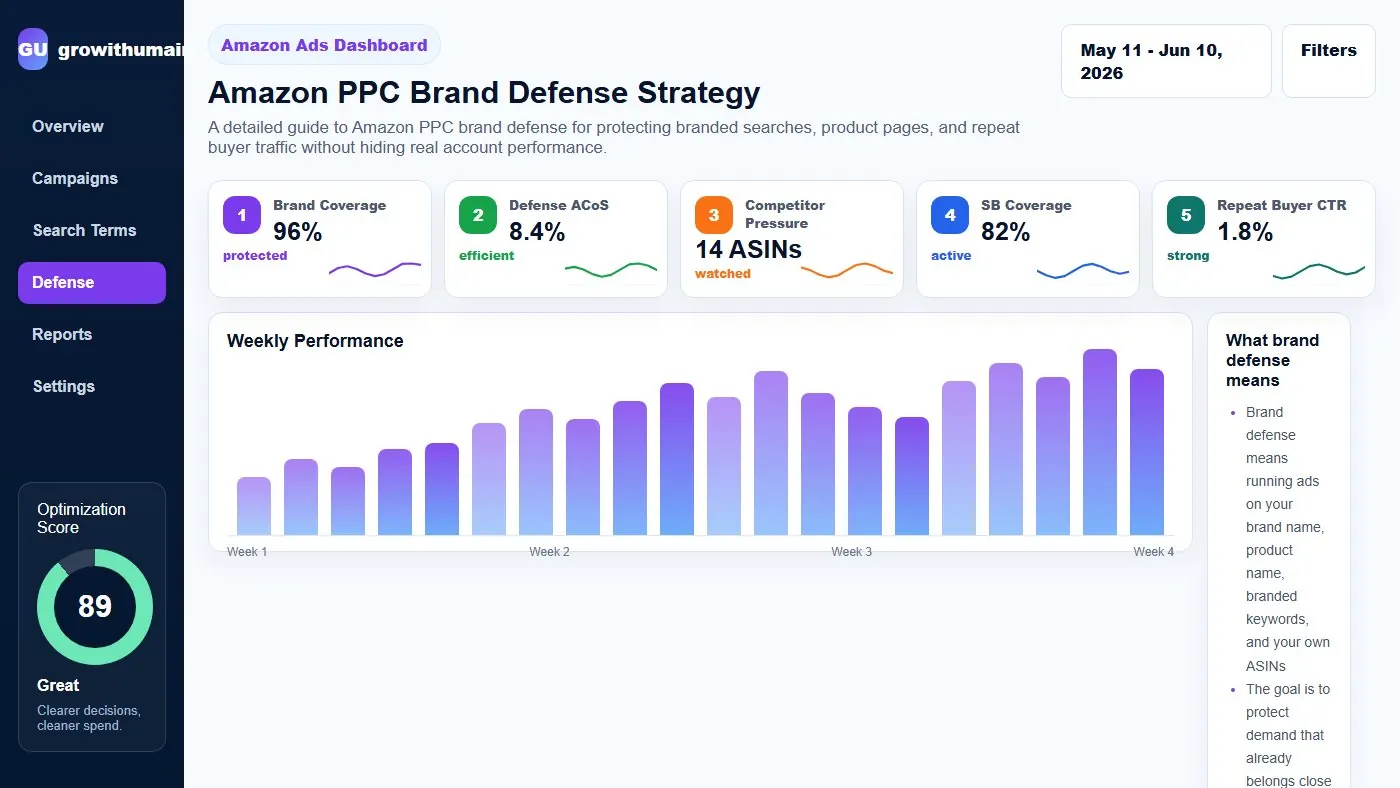
A detailed guide to Amazon PPC brand defense for protecting branded searches, product pages, and repeat buyer traffic without hiding real account performance.
What brand defense means
Brand defense means running ads on your brand name, product name, branded keywords, and your own ASINs. The goal is to protect demand that already belongs close to your brand.
This can include Sponsored Products exact campaigns, Sponsored Brands headline ads, Sponsored Brands Video, and Sponsored Display defensive ASIN campaigns.
Why brand defense can distort reporting
Branded traffic usually converts better because the shopper already knows the brand or product. If brand defense is mixed into total PPC reporting, the overall ACoS can look healthy even when non-branded campaigns are weak.
Report branded and non-branded performance separately so you know whether growth is actually improving.
Defensive ASIN targeting
Target your own product pages to keep competitors from taking product detail page placements. This is especially important for hero ASINs, bundles, variations, and products with strong review proof.
Defensive ASIN campaigns should usually have controlled bids and clear budget limits.
Sponsored Brands for defense
Sponsored Brands can protect top-of-search branded visibility. Use clear brand messaging and direct shoppers to the most relevant Store page or product collection.
If branded Sponsored Brands have strong ROAS, they can be useful, but do not let them cover up weak generic keyword performance.
Weekly defense review
Track branded impression share, ACoS, CTR, CVR, competitor activity, and product page placements. If spend rises without added protection or incremental sales, refine targeting.
Practical checklist
- Review the data by campaign purpose before making changes.
- Separate discovery, ranking, defense, and exact winner campaigns.
- Check search terms, placements, budgets, conversion rate, and rank movement together.
- Write the next action clearly so the account does not drift.
- Recheck results after enough clicks and orders have collected.
Decision table
| Defense area | Campaign type | Main KPI |
|---|---|---|
| Brand keyword | SP Exact | ACoS and impression share |
| Brand headline | Sponsored Brands | CTR and orders |
| Product page | SP Product Targeting | Placement share |
| Remarketing | Sponsored Display | ROAS |
| Competitor pressure | ASIN targeting | Lost placement risk |
I can review the account, identify the first fixes, and turn the data into a clear PPC action plan.
Book PPC audit