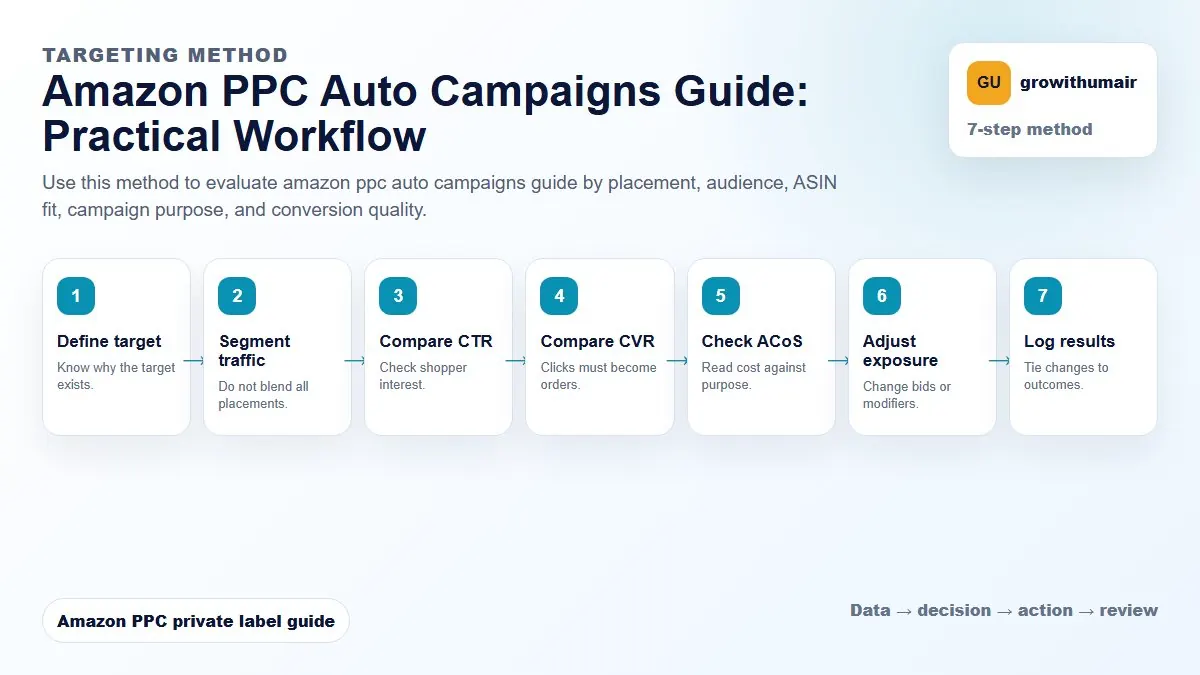
Amazon PPC Auto Campaigns Guide: step-by-step method
Use this method to evaluate amazon ppc auto campaigns guide by placement, audience, ASIN fit, campaign purpose, and conversion quality. The aim is to move from raw Amazon Ads data to a written action list: what to protect, what to reduce, what to test, and what to review again.
- 1. Define target: Know why the target exists.
- 2. Segment traffic: Do not blend all placements.
- 3. Compare CTR: Check shopper interest.
- 4. Compare CVR: Clicks must become orders.
- 5. Check ACoS: Read cost against purpose.
- 6. Adjust exposure: Change bids or modifiers.
- 7. Log results: Tie changes to outcomes.
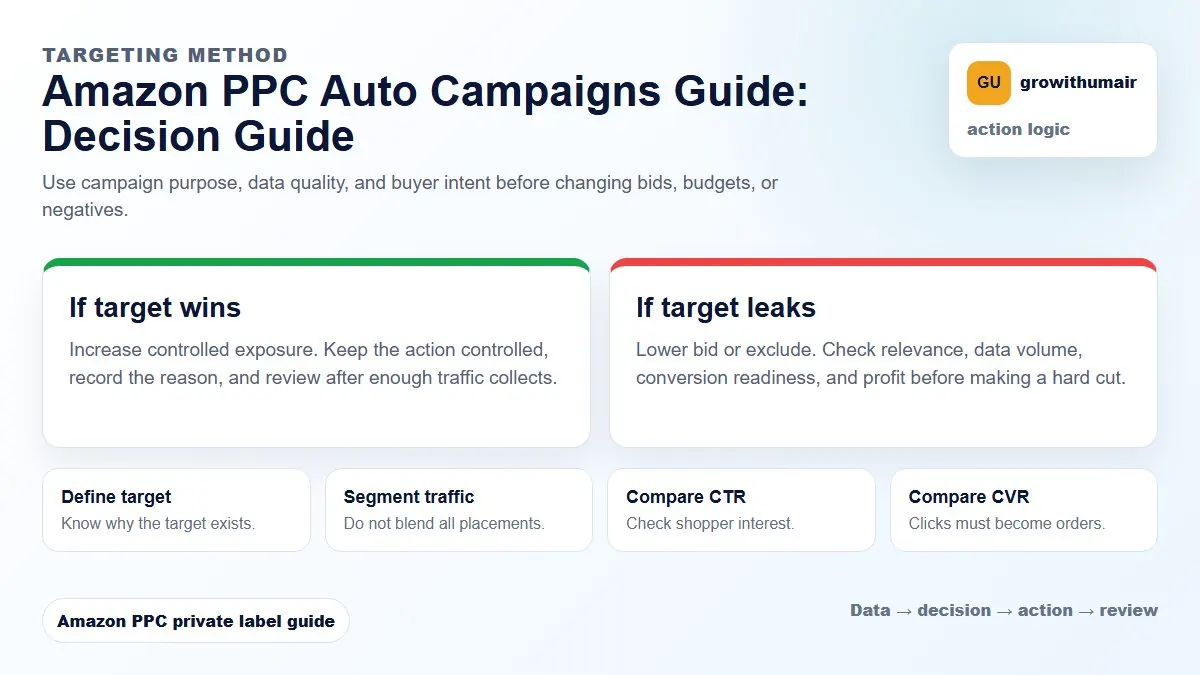
How to choose the next action
Do not treat one metric as the whole answer. For every change, read the metric beside campaign purpose, search intent, listing readiness, rank movement, and profit. This prevents cutting useful traffic just because one report looks uncomfortable.
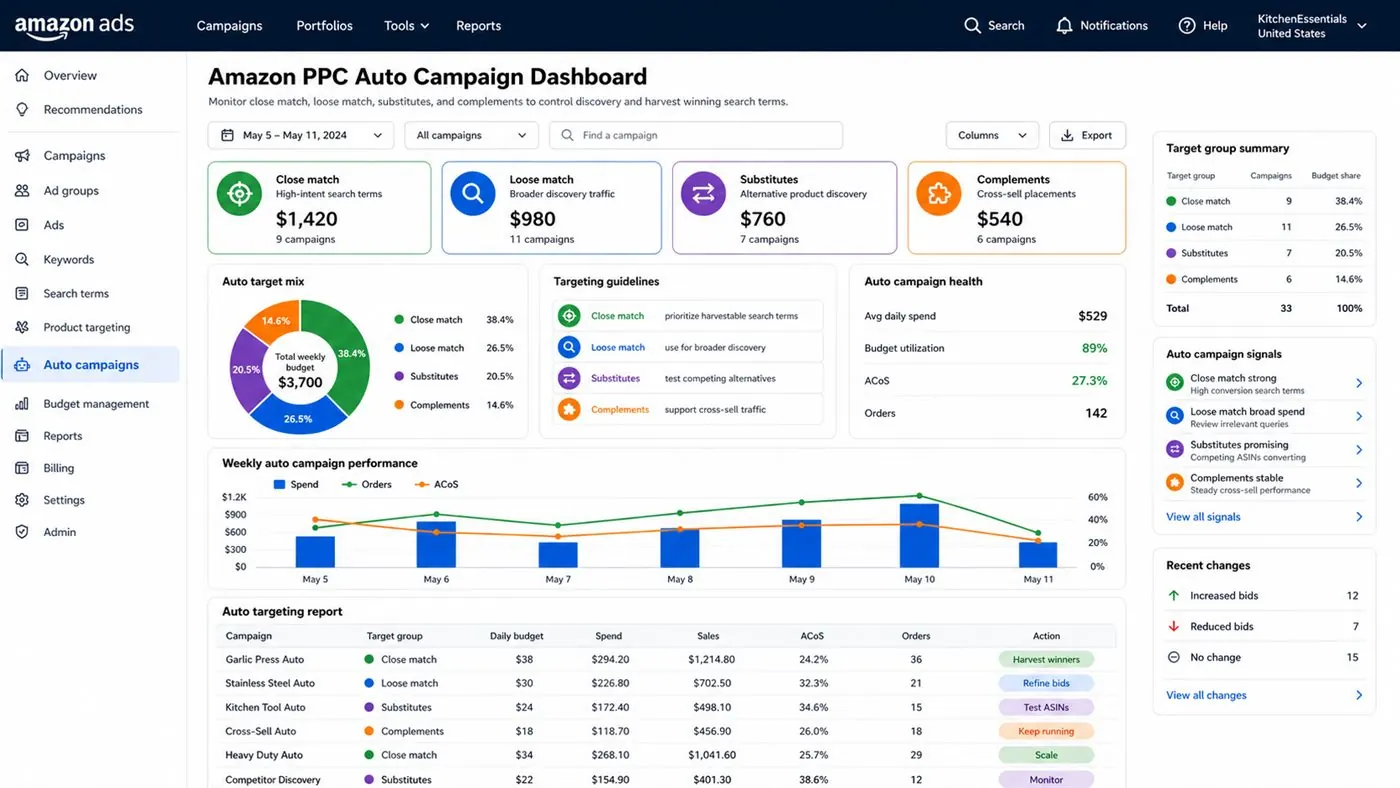
Use auto campaigns to discover search terms and ASIN targets. Do not rely on them as the main structure for a mature account.
What auto campaigns target
Amazon auto campaigns can show ads through close match, loose match, substitutes, and complements. Close match usually stays nearer to the listing. Loose match can reach broader terms. Substitutes and complements place ads around related products and product pages.
| Auto group | Use | Risk |
|---|---|---|
| Close match | Relevant keyword discovery | Can still spend on weak terms |
| Loose match | Broader keyword discovery | Often needs tighter budget |
| Substitutes | Competitor and similar ASIN discovery | Price and review comparison risk |
| Complements | Related product discovery | Can become irrelevant quickly |
How much budget should auto campaigns get?
Auto campaigns should get enough budget to collect useful data but not so much that they starve exact winners. In new accounts, auto may have a discovery role. In mature accounts, exact, phrase, product targeting, and branded campaigns should usually carry more deliberate spend.
If an auto campaign keeps spending on irrelevant terms, do not simply lower the daily budget forever. Add negatives and harvest winners. The goal is learning, not hiding the problem.
How to optimize auto campaigns
- Separate auto targeting groups when performance differs strongly.
- Lower bids on loose match if it attracts poor traffic.
- Review search terms weekly.
- Harvest converting terms into exact campaigns.
- Add negatives for recurring irrelevant spend.
- Check product page ASINs before scaling substitutes.
When auto campaigns hurt performance
Auto campaigns become dangerous when they consume budget, produce unclear search terms, overlap with exact winners, or keep driving irrelevant traffic. They are also risky when the listing is poorly indexed because Amazon may not understand the product properly.
If auto traffic is weak, review listing optimization and backend terms. Better listing relevance can improve how Amazon understands the product.
Auto campaign cleanup workflow
Every week, export the search term report, sort by spend, harvest winners, add negatives, and compare performance by auto targeting group. Then move useful discoveries into the main campaign structure. Auto campaigns are a feeder system, not the whole account.
Send your auto campaign report and I will identify which terms to harvest, block, or monitor.
Book an audit