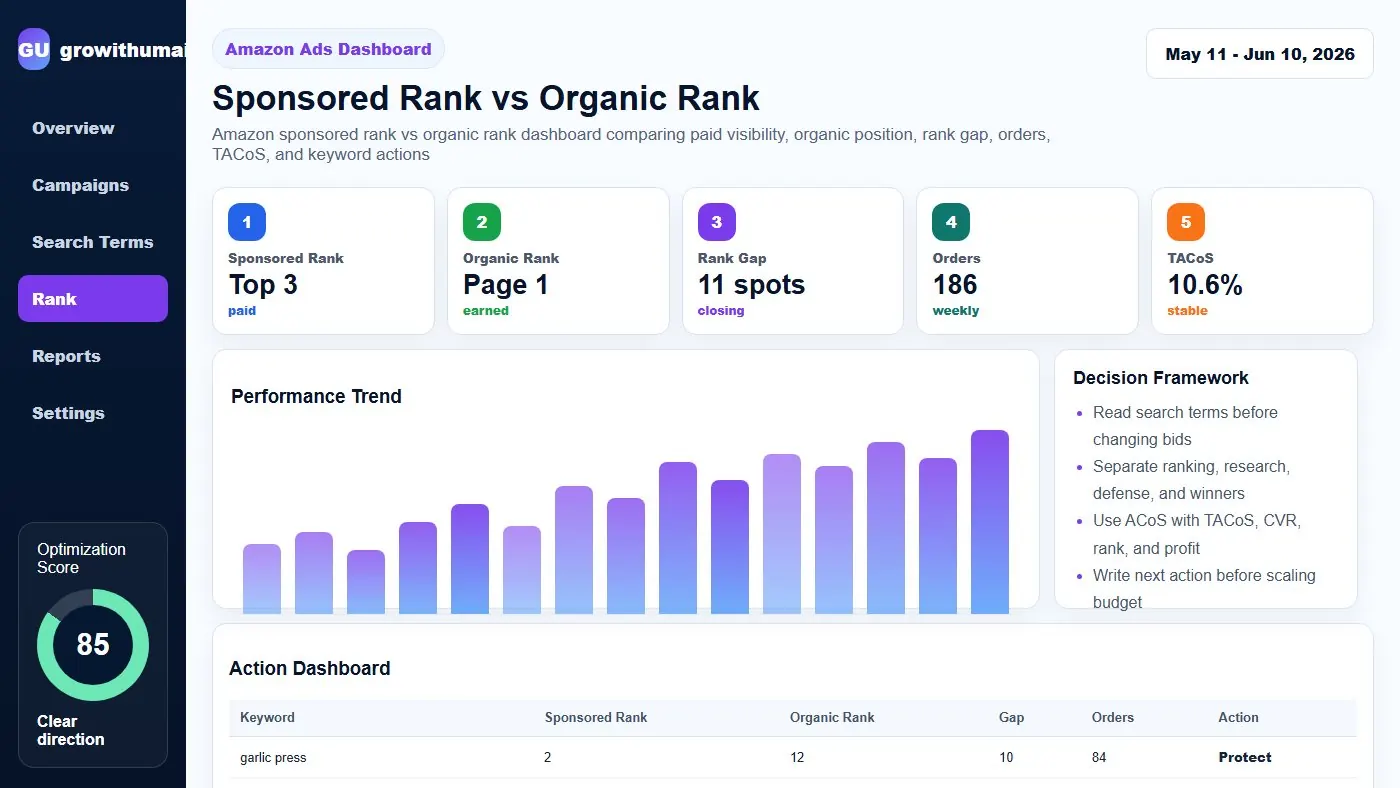
Sponsored Rank vs Organic Rank on Amazon: step-by-step method
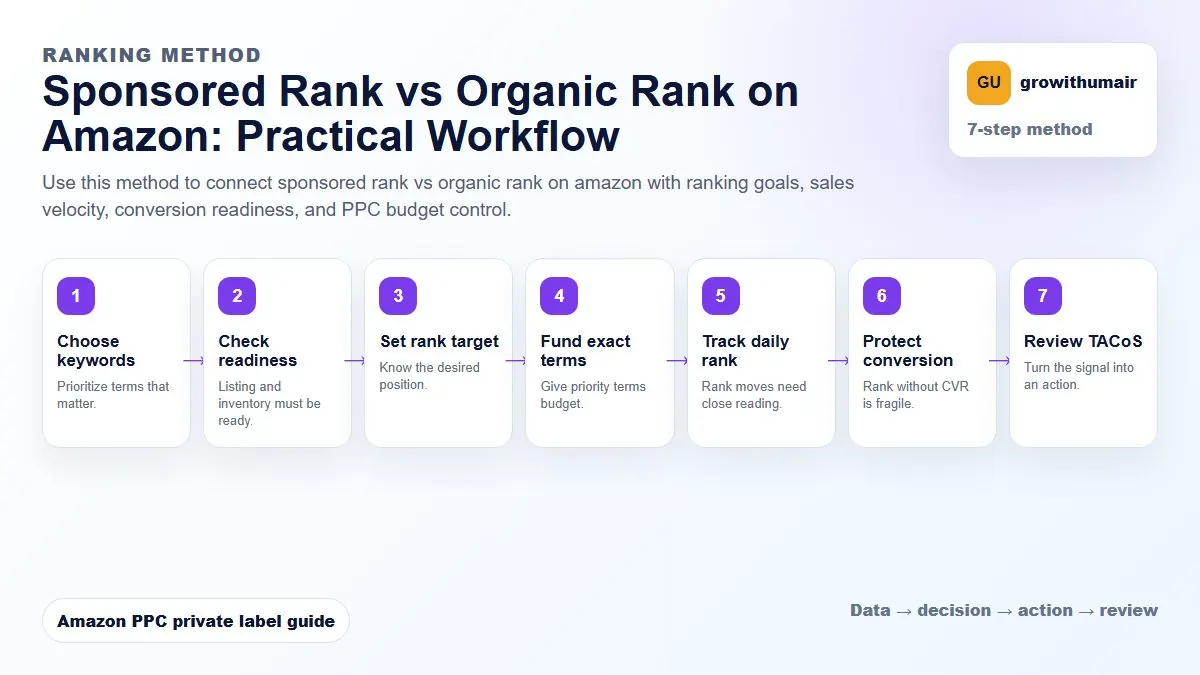
Use this method to connect sponsored rank vs organic rank on amazon with ranking goals, sales velocity, conversion readiness, and PPC budget control. The aim is to move from raw Amazon Ads data to a written action list: what to protect, what to reduce, what to test, and what to review again.
- 1. Choose keywords: Prioritize terms that matter.
- 2. Check readiness: Listing and inventory must be ready.
- 3. Set rank target: Know the desired position.
- 4. Fund exact terms: Give priority terms budget.
- 5. Track daily rank: Rank moves need close reading.
- 6. Protect conversion: Rank without CVR is fragile.
- 7. Review TACoS: Turn the signal into an action.
How to choose the next action
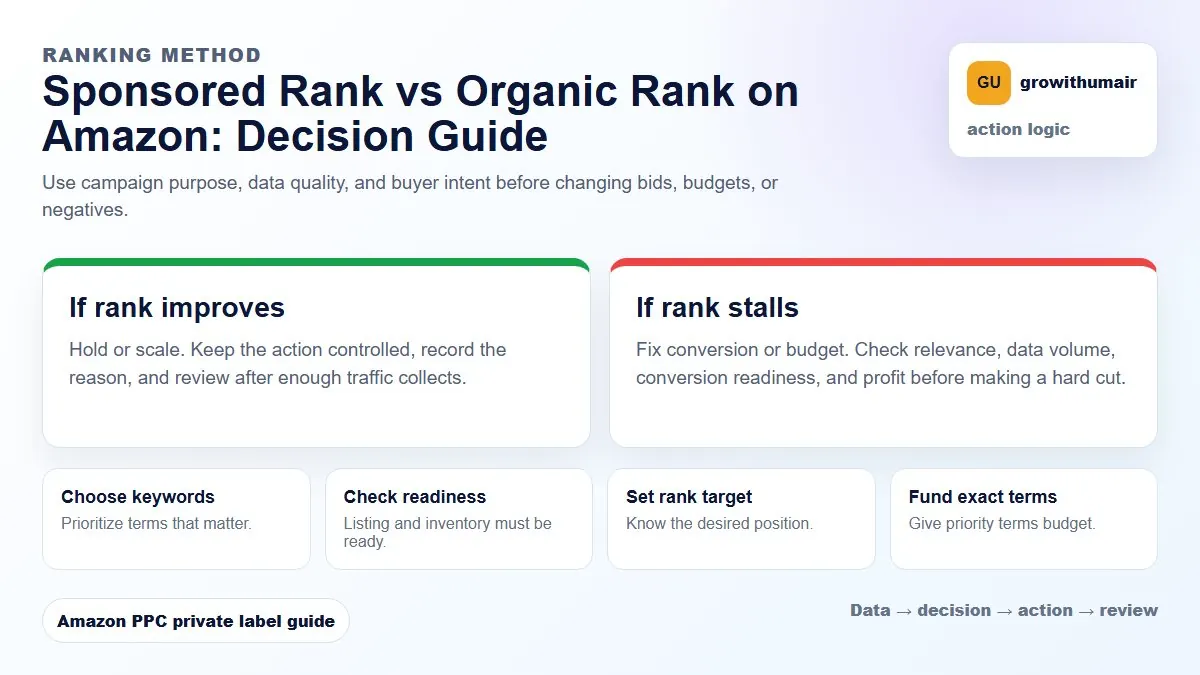
Do not treat one metric as the whole answer. For every change, read the metric beside campaign purpose, search intent, listing readiness, rank movement, and profit. This prevents cutting useful traffic just because one report looks uncomfortable.
What is sponsored rank?
Sponsored rank is the ad position your product receives for a search term. It is controlled by bid, campaign relevance, placement settings, budget, competition, and Amazon's prediction of conversion likelihood.
What is organic rank?
Organic rank is where the product appears naturally without an ad label. Organic ranking is influenced by relevance, conversion, sales velocity, price, reviews, inventory, and historical performance for that keyword.
How PPC supports organic rank
PPC gives a product visibility before organic rank is strong. If the traffic converts, Amazon receives evidence that the listing deserves visibility for that keyword. If the traffic does not convert, spend rises but organic rank may stay flat.
Sponsored rank high + organic rank flat usually means the listing is not converting strongly enough for that keyword, or the keyword is not truly relevant.
When high ACoS is acceptable
High ACoS can be acceptable during a launch or ranking push if TACoS improves, organic rank moves, and total profit has a clear path. It is dangerous when spend rises but keyword rank, conversion, and total sales do not improve.
Decision table
| Situation | Likely meaning | Action |
|---|---|---|
| Sponsored rank high, organic rank improves | PPC is supporting rank | Hold and monitor TACoS |
| Sponsored rank high, no organic movement | Weak conversion or relevance | Review listing and keyword fit |
| Sponsored rank low, organic rank falling | Visibility is weak | Check bid, budget, and competitors |
| Organic rank strong, ACoS high | Ads may be over-supporting | Reduce carefully, not suddenly |
For daily tracking, use the Amazon keyword ranking tracker guide. For campaign setup, read the PPC campaign structure guide.