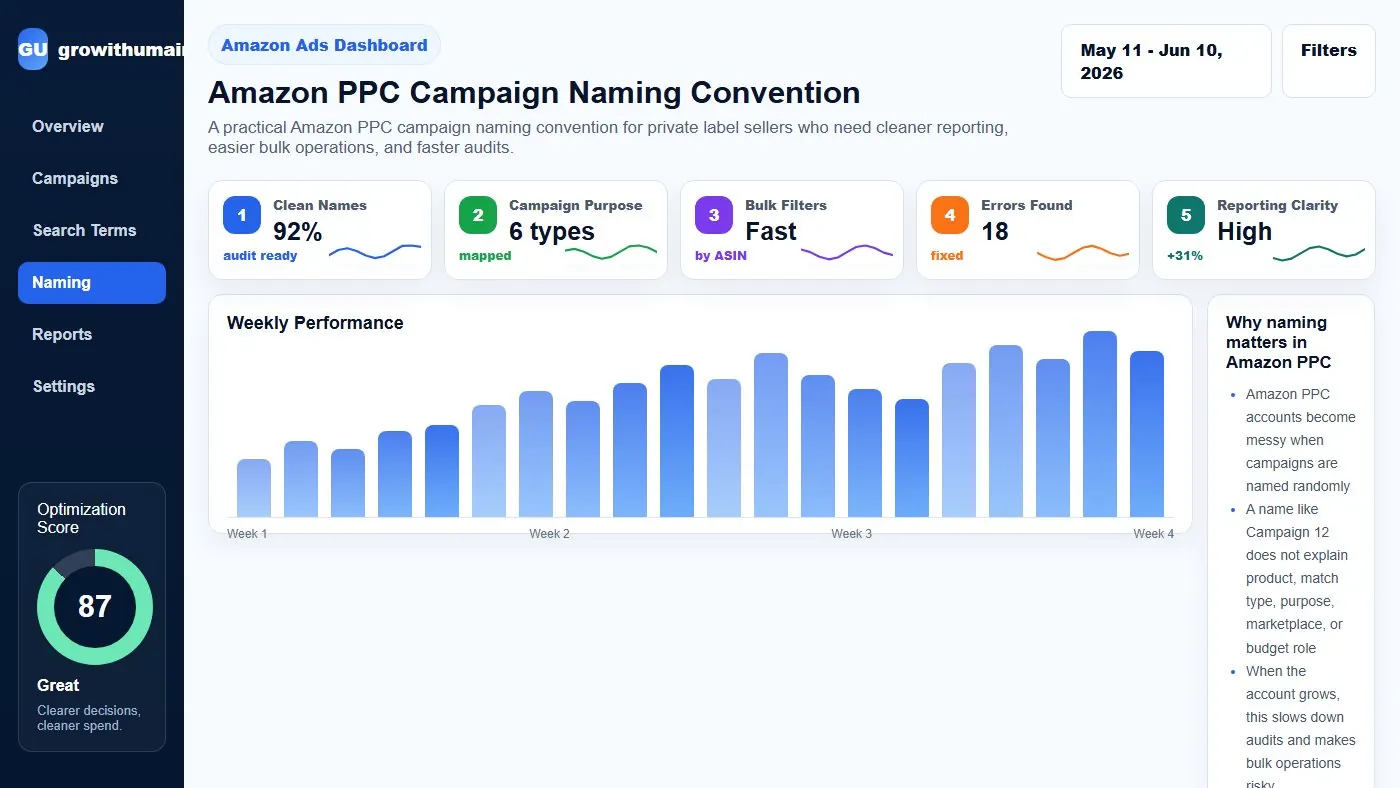
Amazon PPC Campaign Naming Convention: step-by-step method
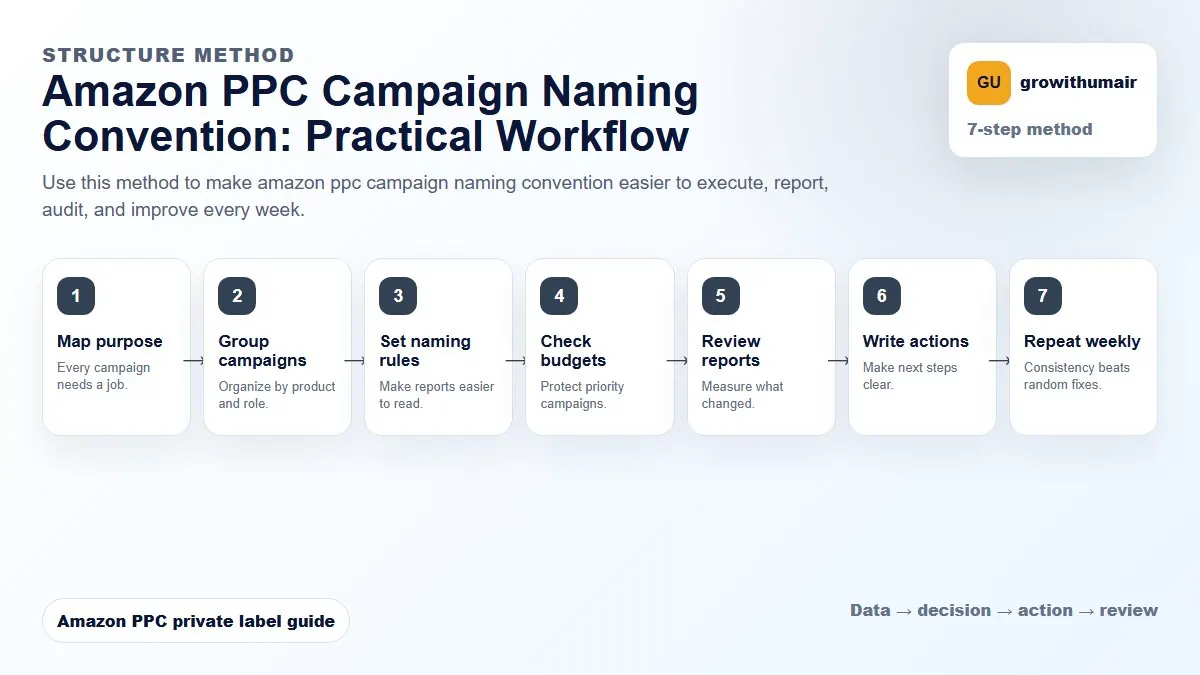
Use this method to make amazon ppc campaign naming convention easier to execute, report, audit, and improve every week. The aim is to move from raw Amazon Ads data to a written action list: what to protect, what to reduce, what to test, and what to review again.
- 1. Map purpose: Every campaign needs a job.
- 2. Group campaigns: Organize by product and role.
- 3. Set naming rules: Make reports easier to read.
- 4. Check budgets: Protect priority campaigns.
- 5. Review reports: Measure what changed.
- 6. Write actions: Make next steps clear.
- 7. Repeat weekly: Consistency beats random fixes.
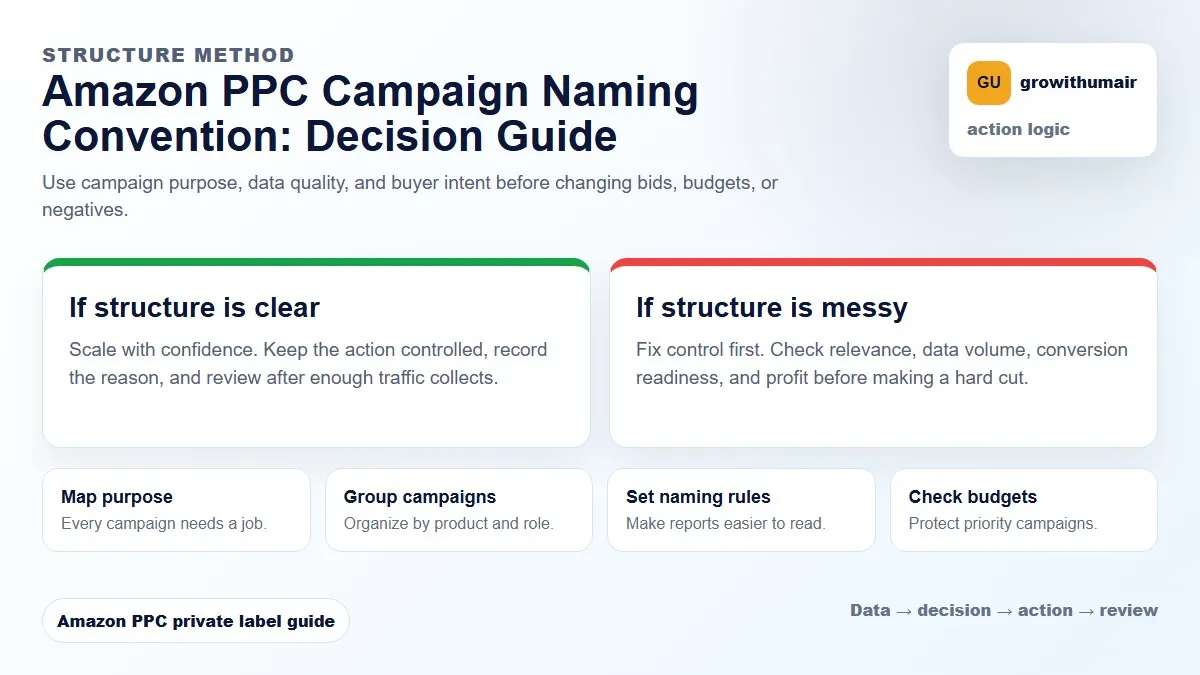
How to choose the next action
Do not treat one metric as the whole answer. For every change, read the metric beside campaign purpose, search intent, listing readiness, rank movement, and profit. This prevents cutting useful traffic just because one report looks uncomfortable.
A practical Amazon PPC campaign naming convention for private label sellers who need cleaner reporting, easier bulk operations, and faster audits.
Why naming matters in Amazon PPC
Amazon PPC accounts become messy when campaigns are named randomly. A name like Campaign 12 does not explain product, match type, purpose, marketplace, or budget role. When the account grows, this slows down audits and makes bulk operations risky.
Good naming helps you filter by ASIN, campaign purpose, match type, brand defense, launch phase, or marketplace. It also helps you separate discovery campaigns from scaling campaigns.
What to include in a PPC campaign name
A strong naming convention usually includes marketplace, brand or ASIN shorthand, campaign purpose, match type, targeting type, and sometimes launch stage or date. The goal is not to make the name long. The goal is to make it useful.
Example structure: US | GarlicPress | SP | Exact | Winner | Rank. Another example: UK | GP01 | SP | Auto | Discovery | May2026.
Campaign naming examples
Use purpose words like Discovery, Research, Winner, Ranking, Defense, ProductTargeting, Competitor, and Launch. These words make performance easier to compare by campaign role.
Keep naming consistent across Sponsored Products, Sponsored Brands, and Sponsored Display. Inconsistent naming makes portfolio reporting and monthly reviews harder.
Naming mistakes to avoid
Do not include vague words like test without explaining what is being tested. Do not mix several match types inside a campaign name unless the campaign actually contains them. Do not rename campaigns every week because historical tracking becomes confusing.
Avoid names that only make sense to one person. The account should be understandable to a client, team member, or future manager.
A simple naming template
Marketplace | Product | Ad Type | Targeting | Purpose | Stage. This is enough for most private label accounts. If the account is large, add SKU, parent ASIN, portfolio, or region.
The best naming convention is one you can maintain during weekly optimization, bulk uploads, and launch expansion.
Practical checklist
- Review the data by campaign purpose before making changes.
- Separate discovery, ranking, defense, and exact winner campaigns.
- Check search terms, placements, budgets, conversion rate, and rank movement together.
- Write the next action clearly so the account does not drift.
- Recheck results after enough clicks and orders have collected.
Decision table
| Name element | Example | Why it matters |
|---|---|---|
| Marketplace | US, UK, DE | Separates country performance |
| Product code | GP01 | Keeps names short |
| Ad type | SP, SB, SD | Shows campaign format |
| Targeting | Exact, Broad, Auto, ASIN | Shows control level |
| Purpose | Winner, Research, Defense | Explains decision logic |
I can review the account, identify the first fixes, and turn the data into a clear PPC action plan.
Book PPC audit