Amazon PPC Match Types: Broad, Phrase, Exact: step-by-step method
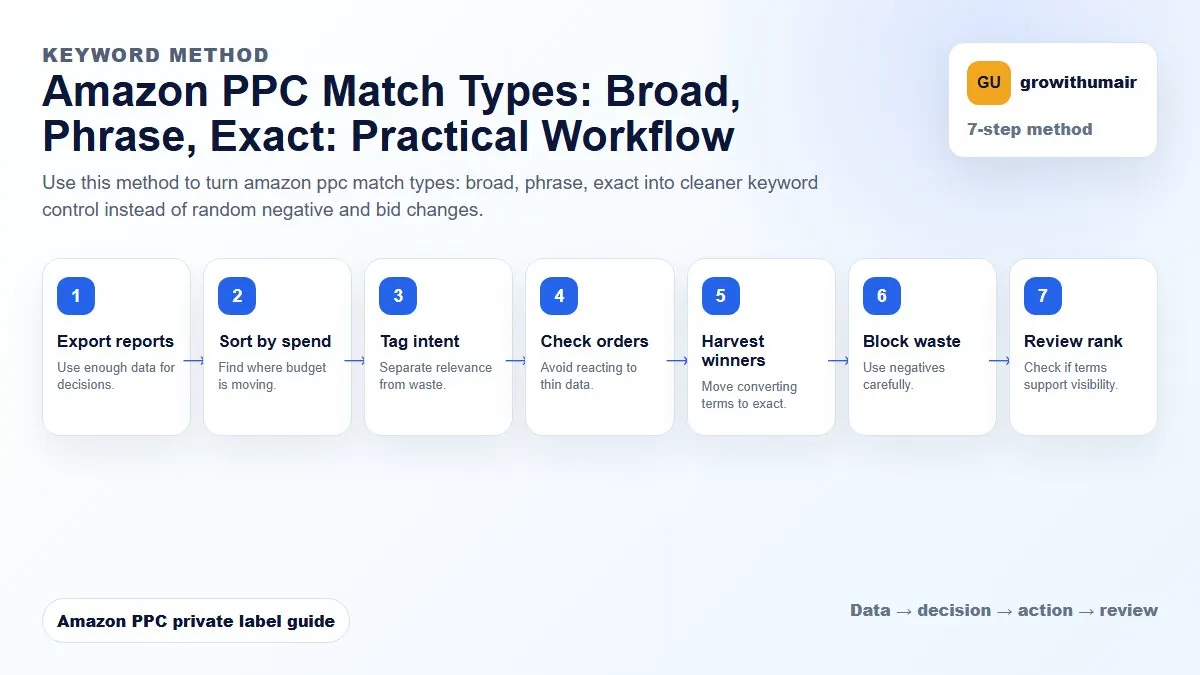
Use this method to turn amazon ppc match types: broad, phrase, exact into cleaner keyword control instead of random negative and bid changes. The aim is to move from raw Amazon Ads data to a written action list: what to protect, what to reduce, what to test, and what to review again.
- 1. Export reports: Use enough data for decisions.
- 2. Sort by spend: Find where budget is moving.
- 3. Tag intent: Separate relevance from waste.
- 4. Check orders: Avoid reacting to thin data.
- 5. Harvest winners: Move converting terms to exact.
- 6. Block waste: Use negatives carefully.
- 7. Review rank: Check if terms support visibility.
How to choose the next action
Do not treat one metric as the whole answer. For every change, read the metric beside campaign purpose, search intent, listing readiness, rank movement, and profit. This prevents cutting useful traffic just because one report looks uncomfortable.
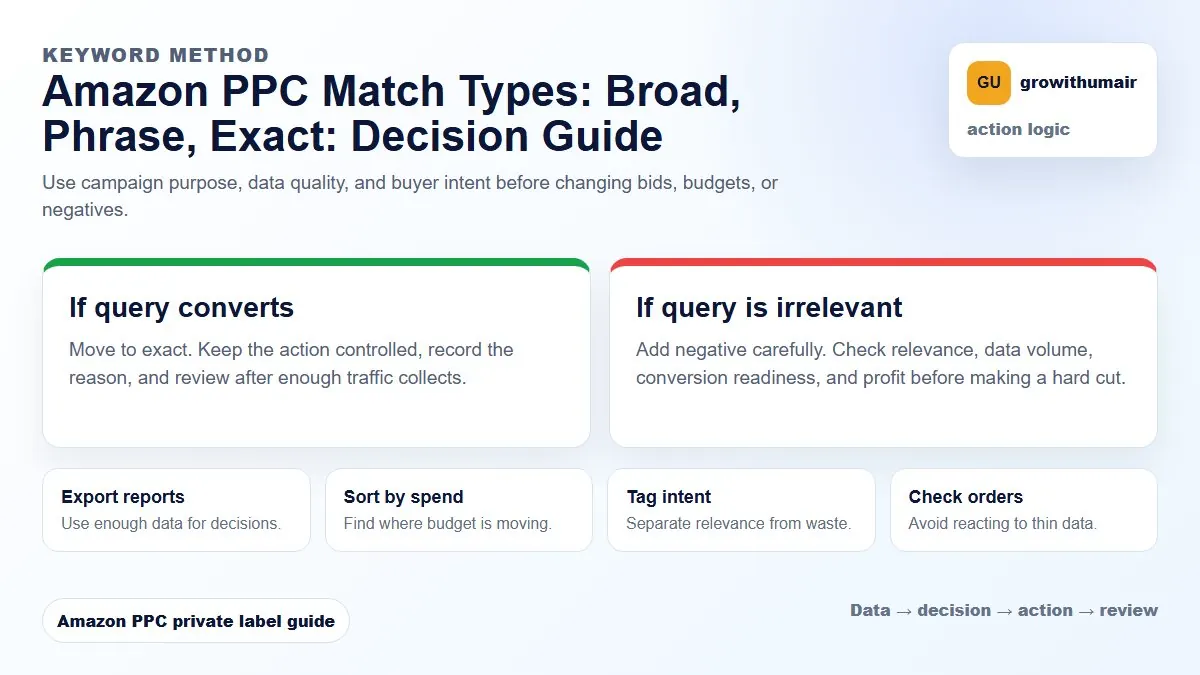
Broad and phrase are for discovery. Exact is for control. Negatives protect budget when discovery goes too wide.
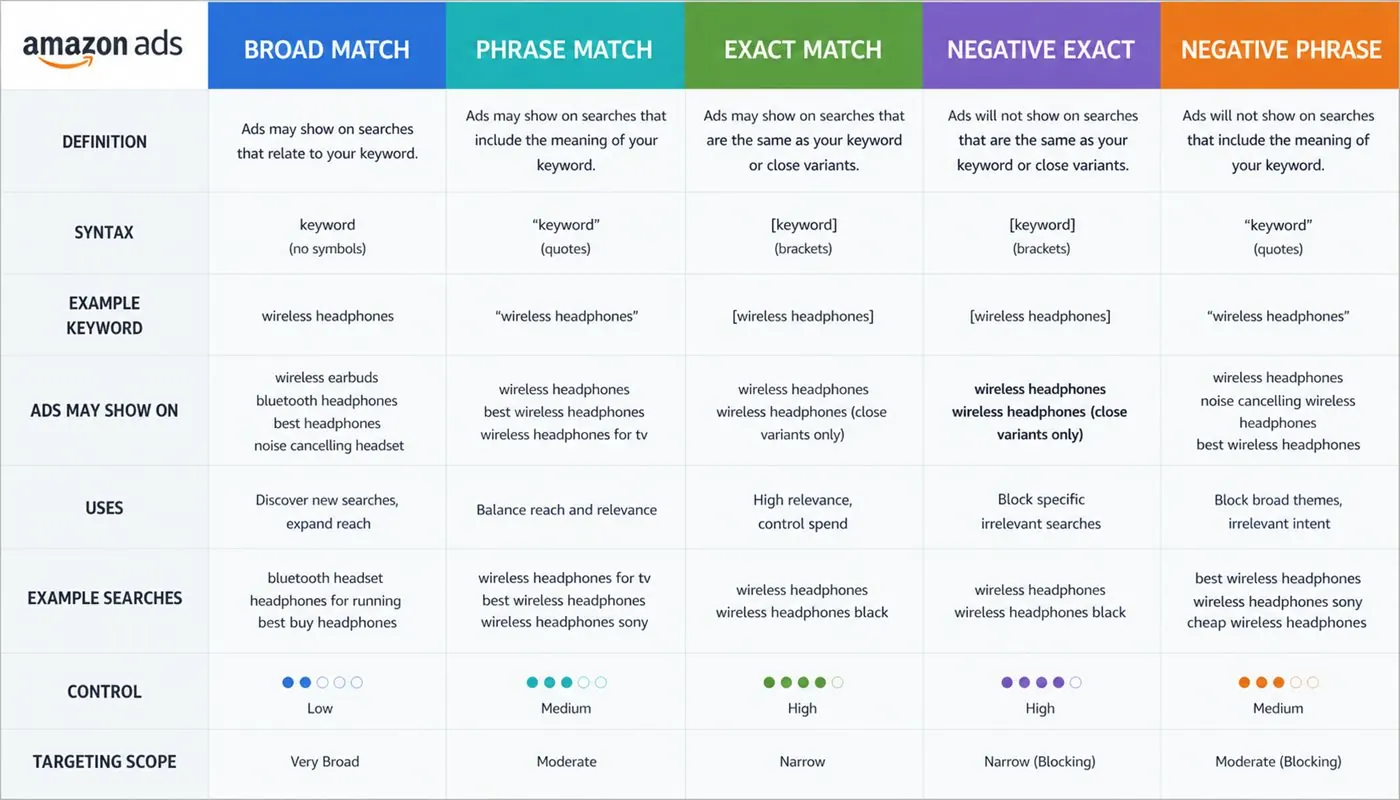
Broad match
Broad match can trigger a wider range of related search terms. It is useful for discovery, but it can spend on weak variations if left unmanaged. Broad campaigns need regular search term reviews and negatives.
Phrase match
Phrase match is tighter than broad but still allows variations around the phrase. It is useful when you know a keyword theme is relevant but still want to find long-tail searches. Phrase can be strong during launch and keyword expansion.
Exact match
Exact match gives the cleanest control. Use exact campaigns for proven keywords, ranking targets, branded defense, and terms that need protected budget. Exact match is where most harvested winners should live.
| Match type | Best use | Optimization focus |
|---|---|---|
| Broad | Discovery | Negatives and budget control |
| Phrase | Theme expansion | Harvest strong long-tail terms |
| Exact | Scaling winners | Bids, placement, budget |
| Negative exact | Block one query | Avoid over-blocking |
| Negative phrase | Block a theme | Use only when pattern is clear |
How match types fit together
A clean structure may use broad or phrase to discover terms, exact to scale winners, and negatives to reduce overlap. If all match types are mixed in one campaign, optimization becomes harder because every keyword has a different job.
For example, a phrase campaign may discover "stainless steel garlic press heavy duty." If it converts well, harvest it into exact. Then decide whether to negative exact in the phrase campaign depending on overlap and budget.
Common match type mistakes
- Using broad match with high budgets and no weekly review.
- Leaving exact winners inside research campaigns.
- Adding negative phrase too early and blocking useful variations.
- Using the same keyword across too many campaigns.
- Changing bids before reading search term data.
Match types are powerful when campaign purpose is clear. Pair this guide with keyword harvesting and negative keyword cleanup.
Send your campaign list and search term report. I can show where broad, phrase, exact, and negatives should be separated.
Book an audit