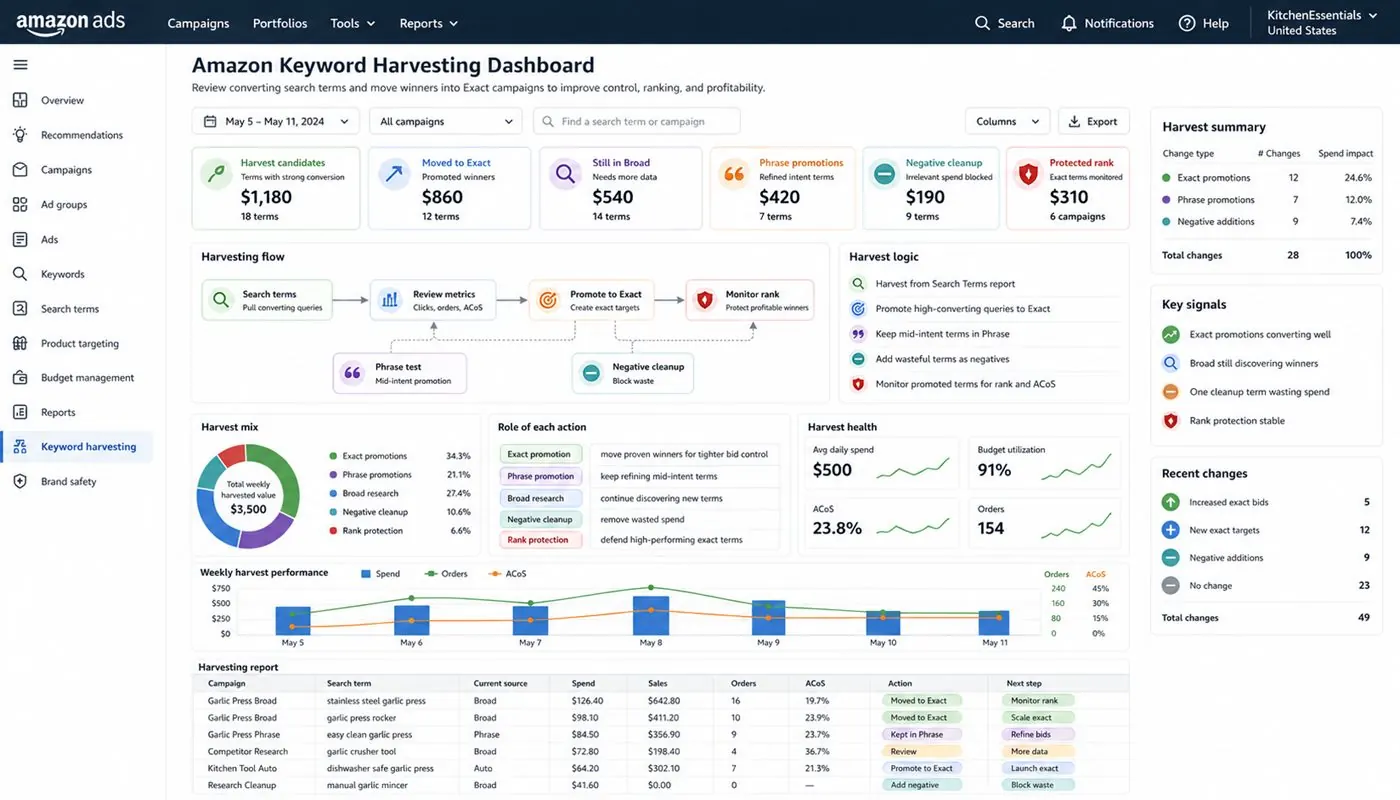
Amazon Keyword Harvesting Guide for PPC: step-by-step method
Use this method to turn amazon keyword harvesting guide for ppc into cleaner keyword control instead of random negative and bid changes. The aim is to move from raw Amazon Ads data to a written action list: what to protect, what to reduce, what to test, and what to review again.
- 1. Export reports: Use enough data for decisions.
- 2. Sort by spend: Find where budget is moving.
- 3. Tag intent: Separate relevance from waste.
- 4. Check orders: Avoid reacting to thin data.
- 5. Harvest winners: Move converting terms to exact.
- 6. Block waste: Use negatives carefully.
- 7. Review rank: Check if terms support visibility.
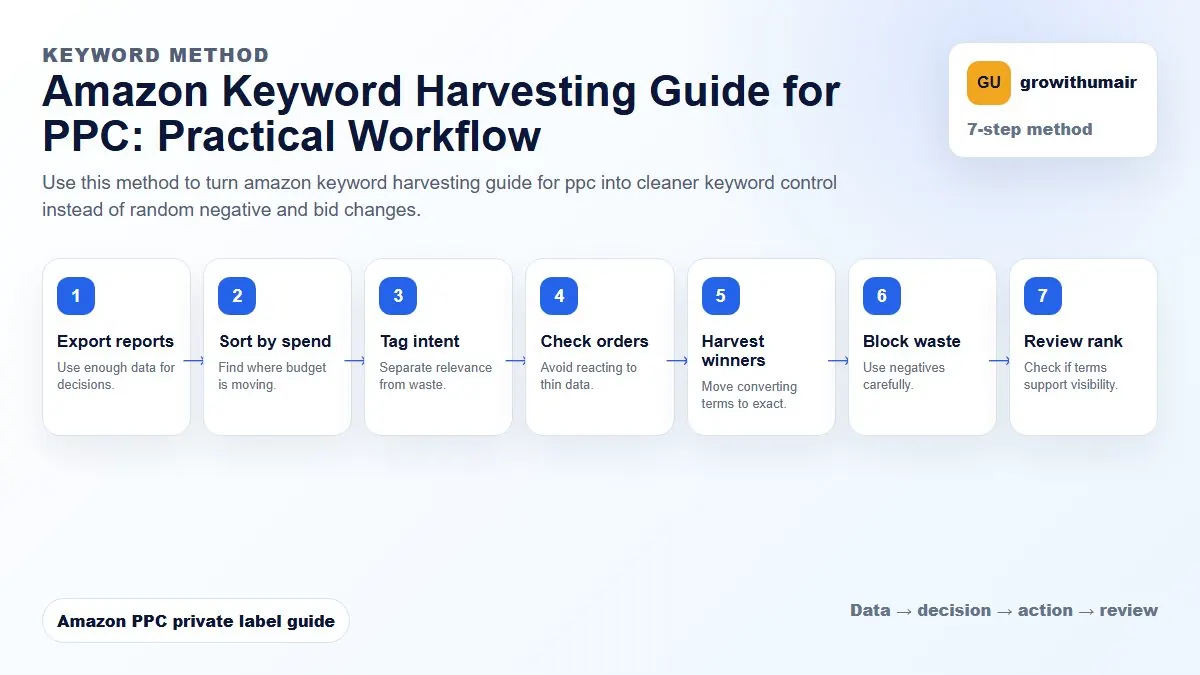
How to choose the next action
Do not treat one metric as the whole answer. For every change, read the metric beside campaign purpose, search intent, listing readiness, rank movement, and profit. This prevents cutting useful traffic just because one report looks uncomfortable.
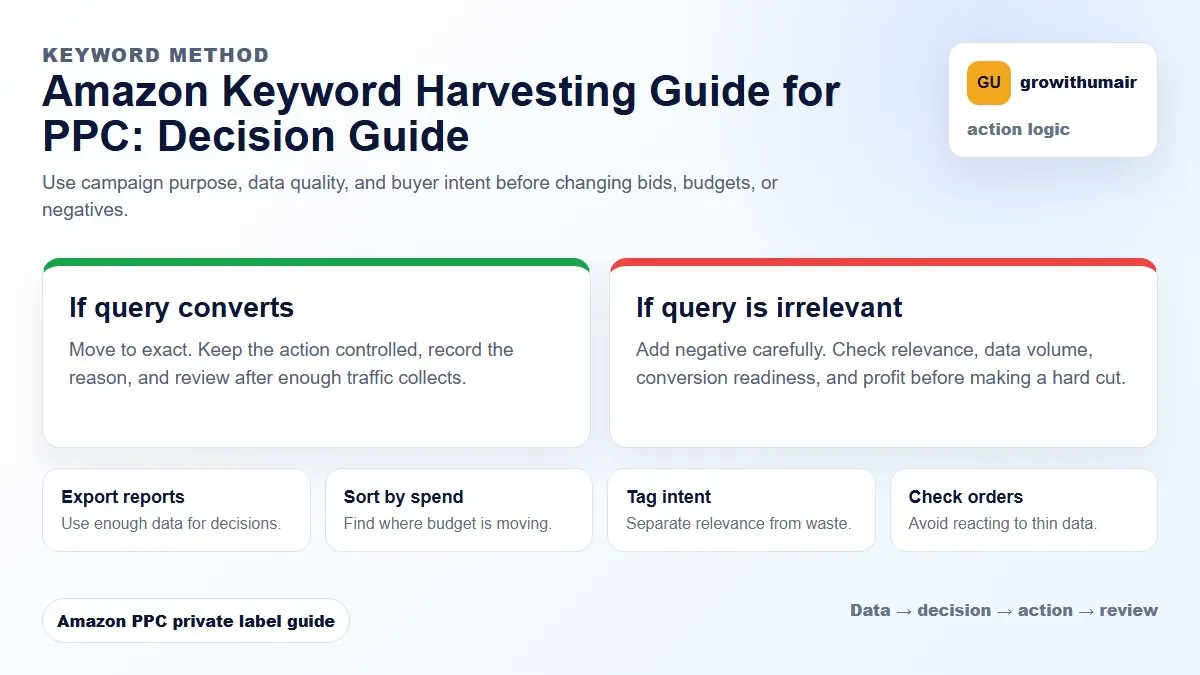
Harvesting means taking a converting customer search term and adding it as a keyword in a campaign where you can control bid, budget, and placement more clearly.
When a term is ready to harvest
A search term is usually ready when it has orders, acceptable ACoS, and enough clicks to show that the result is not random. For low-ticket products, you may need more orders before making decisions. For high-ticket products, fewer orders can still be meaningful if relevance is very strong.
| Search term result | Decision | Reason |
|---|---|---|
| Orders and good ACoS | Add as exact keyword | Control and scale it |
| Orders but high ACoS | Harvest with lower bid | Useful but not fully efficient |
| Clicks, no orders, relevant | Monitor or improve listing | May need more data |
| Irrelevant spend | Add negative | Protect budget |
Where harvested keywords should go
Put harvested winners into exact campaigns grouped by purpose. A ranking keyword should not sit beside a profit keyword with different bid goals. A branded term should not compete for budget with broad research. Good campaign structure makes harvesting useful.
Do not duplicate the same exact keyword across many campaigns unless there is a clear reason. Duplication can split data and make optimization confusing.
Should you negative the term in the source campaign?
Sometimes yes, sometimes no. If the source campaign is research and the exact campaign is now responsible for that keyword, adding an exact negative in the source campaign can prevent traffic overlap. But if the source campaign still finds useful variations around the term, keep it running and manage bids carefully.
The mistake is adding negatives automatically without understanding the campaign purpose. Read the negative keywords guide before blocking terms aggressively.
Weekly harvesting workflow
- Download search term report for 14 to 30 days.
- Filter terms with orders first.
- Check ACoS, relevance, and click volume.
- Add winners into exact campaigns.
- Set starting bids based on performance and target ACoS.
- Review harvested keywords in the next weekly optimization cycle.
Send the search term report and current campaign structure. I will separate winners, waste, and terms that need more data.
Book an audit