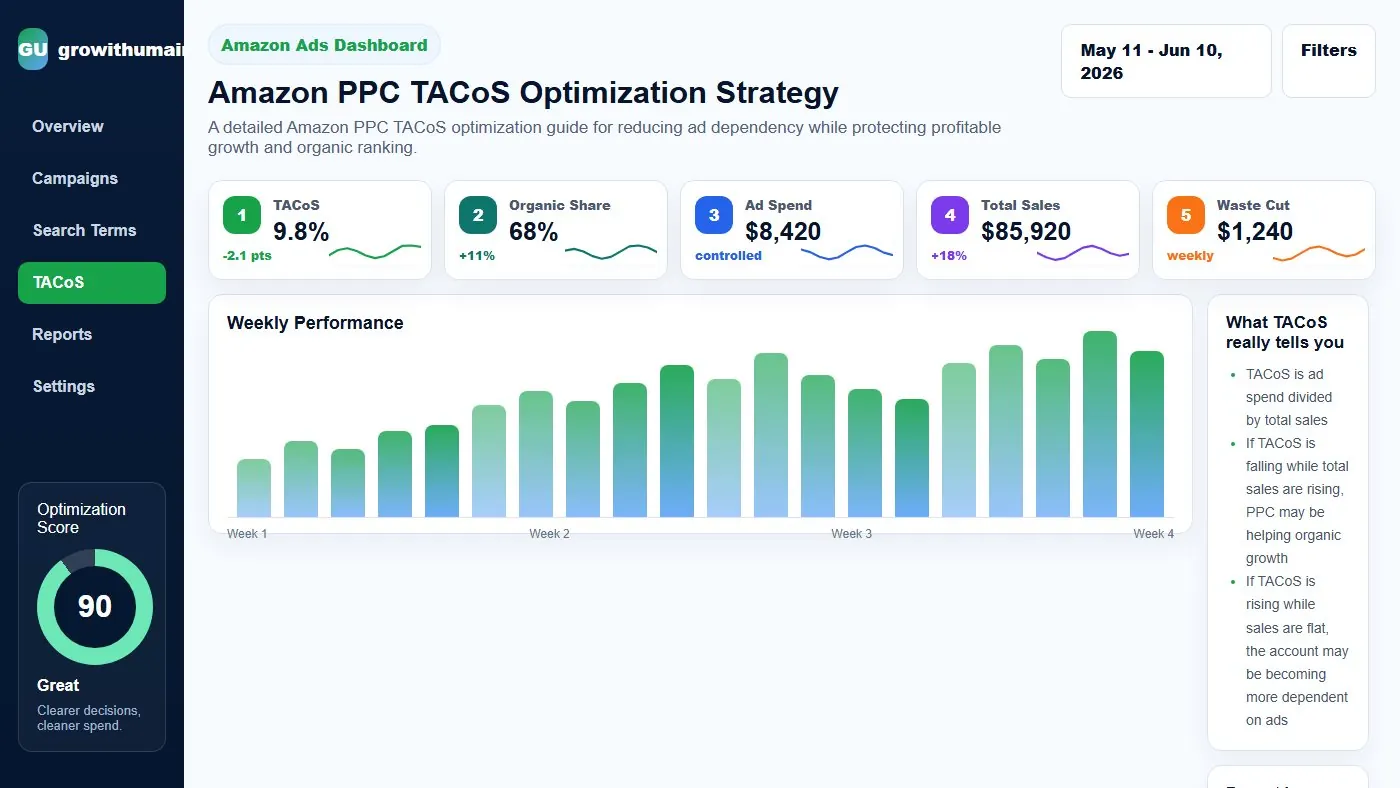
Amazon PPC TACoS Optimization Strategy: step-by-step method
Use this method to connect amazon ppc tacos optimization strategy with margin, campaign purpose, and total account health before making spend changes. The aim is to move from raw Amazon Ads data to a written action list: what to protect, what to reduce, what to test, and what to review again.
- 1. Confirm margin: Know the profit room before spending.
- 2. Set target ACoS: Use margin and campaign purpose.
- 3. Segment campaigns: Separate ranking, research, and winners.
- 4. Find spend leaks: Sort by spend and no-order terms.
- 5. Protect winners: Do not cut profitable traffic.
- 6. Track TACoS: Watch total account impact.
- 7. Review profit: Sales must become contribution profit.
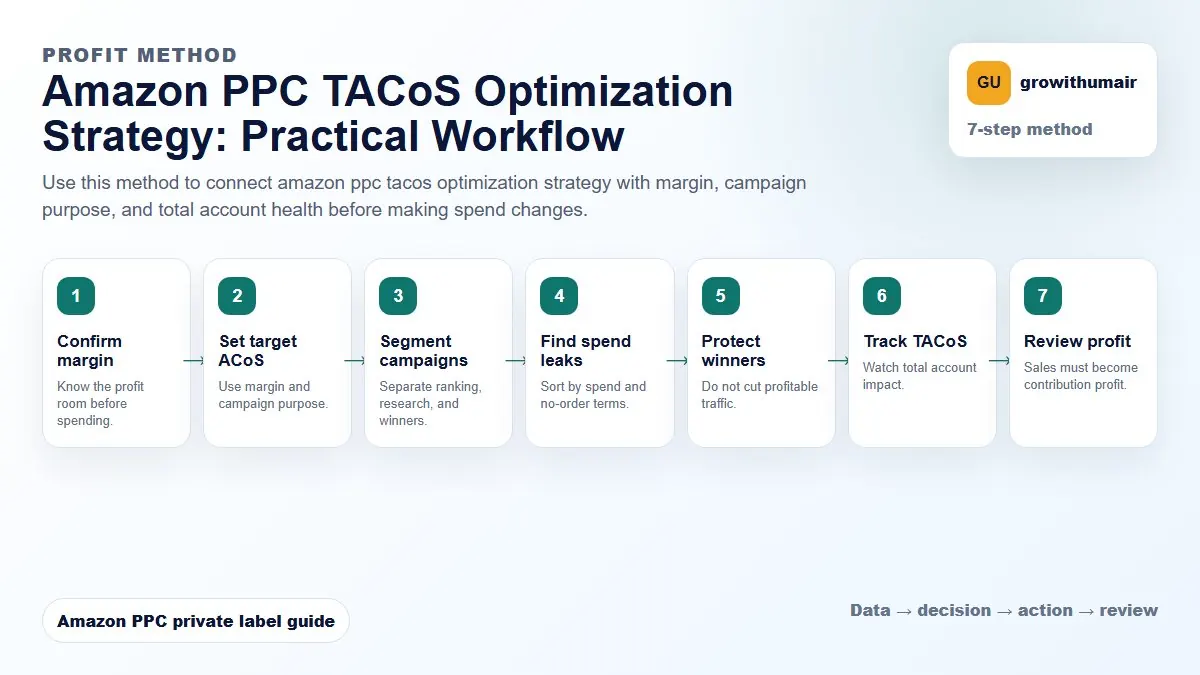
How to choose the next action
Do not treat one metric as the whole answer. For every change, read the metric beside campaign purpose, search intent, listing readiness, rank movement, and profit. This prevents cutting useful traffic just because one report looks uncomfortable.
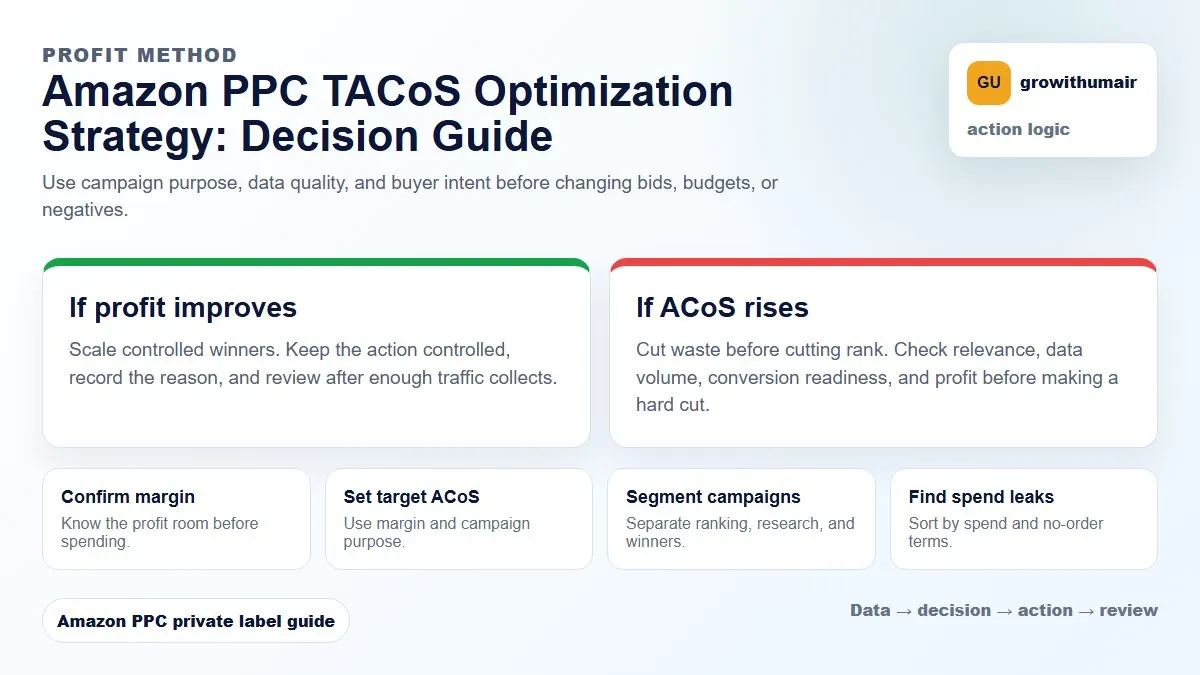
A detailed Amazon PPC TACoS optimization guide for reducing ad dependency while protecting profitable growth and organic ranking.
What TACoS really tells you
TACoS is ad spend divided by total sales. If TACoS is falling while total sales are rising, PPC may be helping organic growth. If TACoS is rising while sales are flat, the account may be becoming more dependent on ads.
Do not lower TACoS by starving growth
The easiest way to lower TACoS is to cut ad spend. But if those ads support ranking, launches, or profitable exact terms, cutting too hard can reduce total sales and organic visibility. TACoS must be read with sales, rank, and profit.
Improve organic sales share
Better listing conversion, stronger rank, review growth, price competitiveness, inventory stability, and keyword relevance all help organic sales share. PPC can support this, but the product page must convert.
Structure PPC by TACoS role
Brand defense protects existing demand. Exact winners scale profitable traffic. Ranking campaigns build future organic visibility. Research campaigns find new opportunities. Each role affects TACoS differently.
TACoS optimization workflow
Cut irrelevant waste, harvest profitable search terms, protect rank-driving keywords, improve listing conversion, monitor organic share, and scale only where total sales and profit improve.
Practical checklist
- Review the data by campaign purpose before making changes.
- Separate discovery, ranking, defense, and exact winner campaigns.
- Check search terms, placements, budgets, conversion rate, and rank movement together.
- Write the next action clearly so the account does not drift.
- Recheck results after enough clicks and orders have collected.
Decision table
| TACoS pattern | Meaning | Decision |
|---|---|---|
| TACoS down, sales up | Healthy growth | Scale winners |
| TACoS up, sales flat | Ad dependency | Cut waste |
| TACoS down, sales down | Over-cut ads | Restore priority PPC |
| ACoS high, TACoS down | Possible rank support | Review rank |
| ACoS low, TACoS up | Organic weakness | Fix listing/rank |
I can review the account, identify the first fixes, and turn the data into a clear PPC action plan.
Book PPC audit